
Cutting-Edge Creativity: 15 Scissors Drawing Ideas That Will Elevate Your Doodle Game
Ever stared at a blank page and felt your brain just… freeze?
Yeah, me too. You want to draw something, anything, but your hand refuses to cooperate.
Here’s a little secret I learned after years of doodling frustration: ordinary objects make extraordinary drawing practice. And scissors? They’re secretly perfect.
I know what you’re thinking. “Scissors? Really?” But stick with me. A pair of scissors gives you straight lines, curved handles, intersecting angles, and symmetrical challenges—all in one tiny package. Plus, they don’t move, complain, or bite.
In this guide, I’ll walk you through 15 scissors drawing ideas that range from stupid-simple to surprisingly clever.
No fancy materials needed. Just grab your pen, find some white paper, and let’s get those creative juices flowing.
FYI: Every idea here follows a beginner-friendly black line drawing style on a white background. No shading, no patterns, no pressure. Just pure, unfiltered doodle fun.
Ready? Let’s cut to it. (Sorry, I had to.)
Why Scissors? (And Why You Should Care)
Before we jump into the actual drawing ideas, let me ask you something: When’s the last time you actually looked at a pair of scissors?
Not glanced. Looked.
Scissors have this beautiful mechanical simplicity. Two blades, two handles, one pivot point. That’s it. But within that simplicity hides a ton of drawing lessons.
You’ll practice symmetry, angle work, negative space, and repetitive shapes—all without feeling like you’re doing “serious” art practice.
I personally use scissors doodles as my warm-up before bigger projects. They loosen my hand, wake up my eye, and take less than two minutes each. Try that with a portrait drawing. :/
Plus, the results look genuinely impressive for the effort involved. Nobody needs to know you only spent 90 seconds on that perfect little scissor sketch.
The 15 Scissors Drawing Ideas (From Simple to Playful)
Let me break these down into bite-sized chunks. I’ve grouped them so you can start easy and work your way up—or just jump around like a chaotic doodler. Your call.
1. The Classic Front-View Scissors
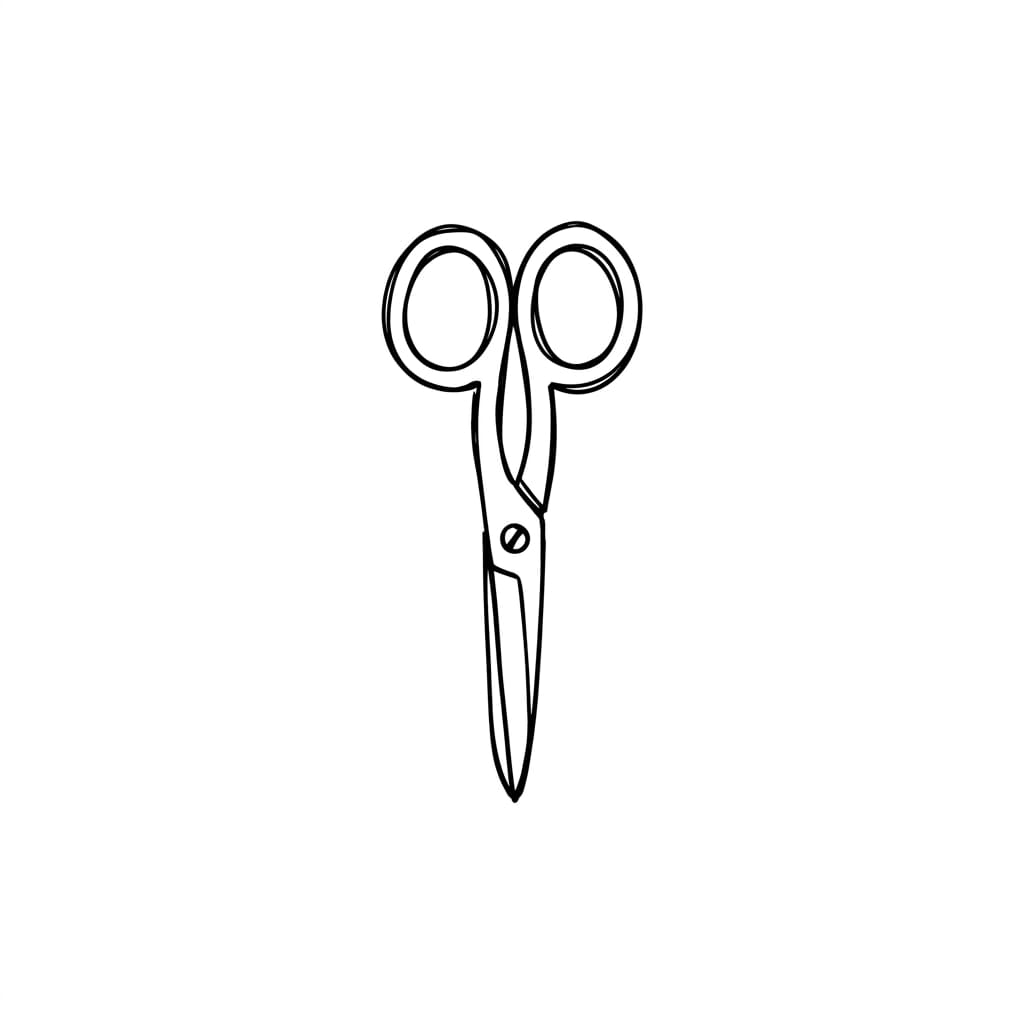
Start here. I mean it. Don’t skip to the fancy stuff.
Draw a small pair of scissors staring straight at you. Think of two oval handles sitting side by side, with two blades pointing upward like a peaceful “V.”
Keep your lines clean and minimal. No shading means you can’t hide mistakes—but honestly, that’s the point.
This one teaches you symmetry. Your left side should mirror your right. Mess it up? Who cares. Doodle another one right next to it.
2. The X Marks the Spot
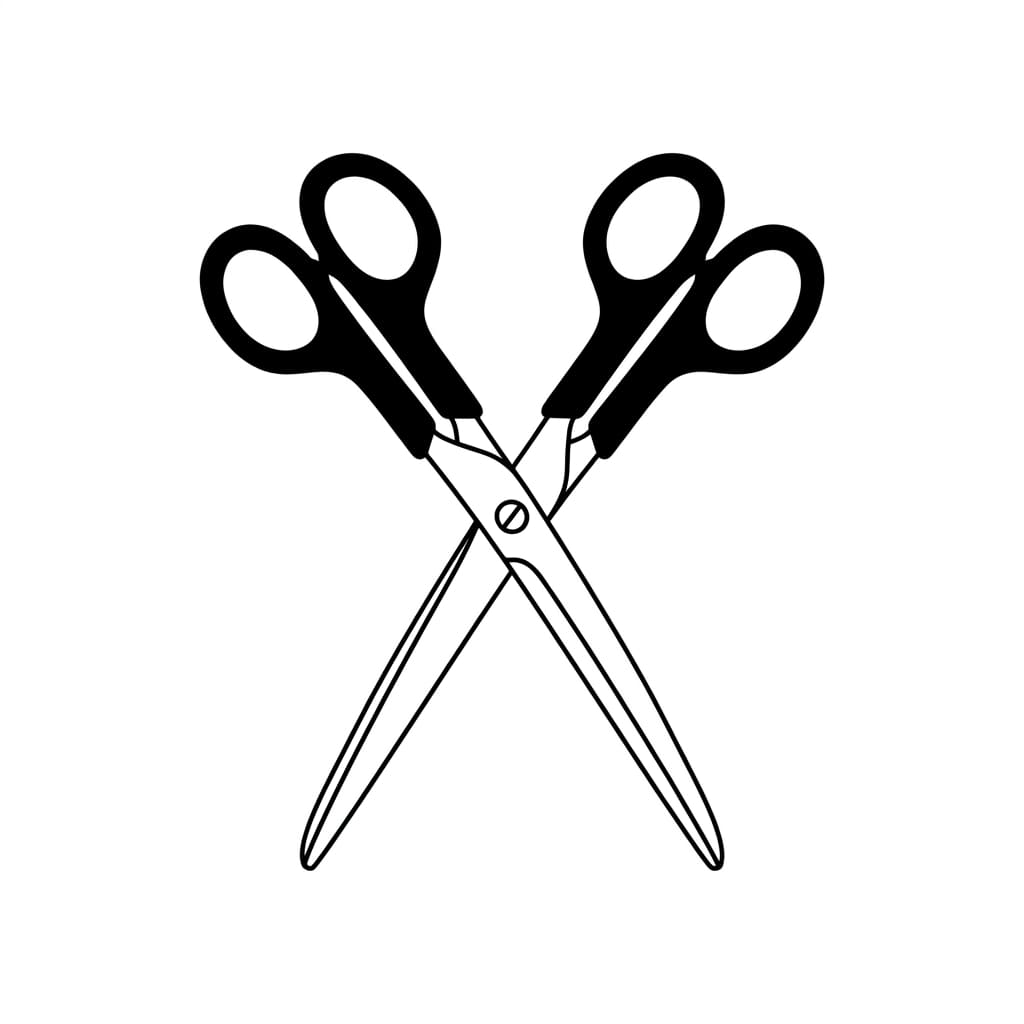
Here’s where things get a little spicy.
Cross two scissors over each other like a pirate flag (but friendlier). The intersection point becomes the focal moment of your drawing. Pay attention to which blade goes over which.
This tiny detail makes the difference between “looks right” and “something’s off.”
I love this one for sketchbook margins. It fills empty space beautifully and takes zero brain power once you’ve practiced it twice.
3. Big, Bold, and Beginner-Friendly
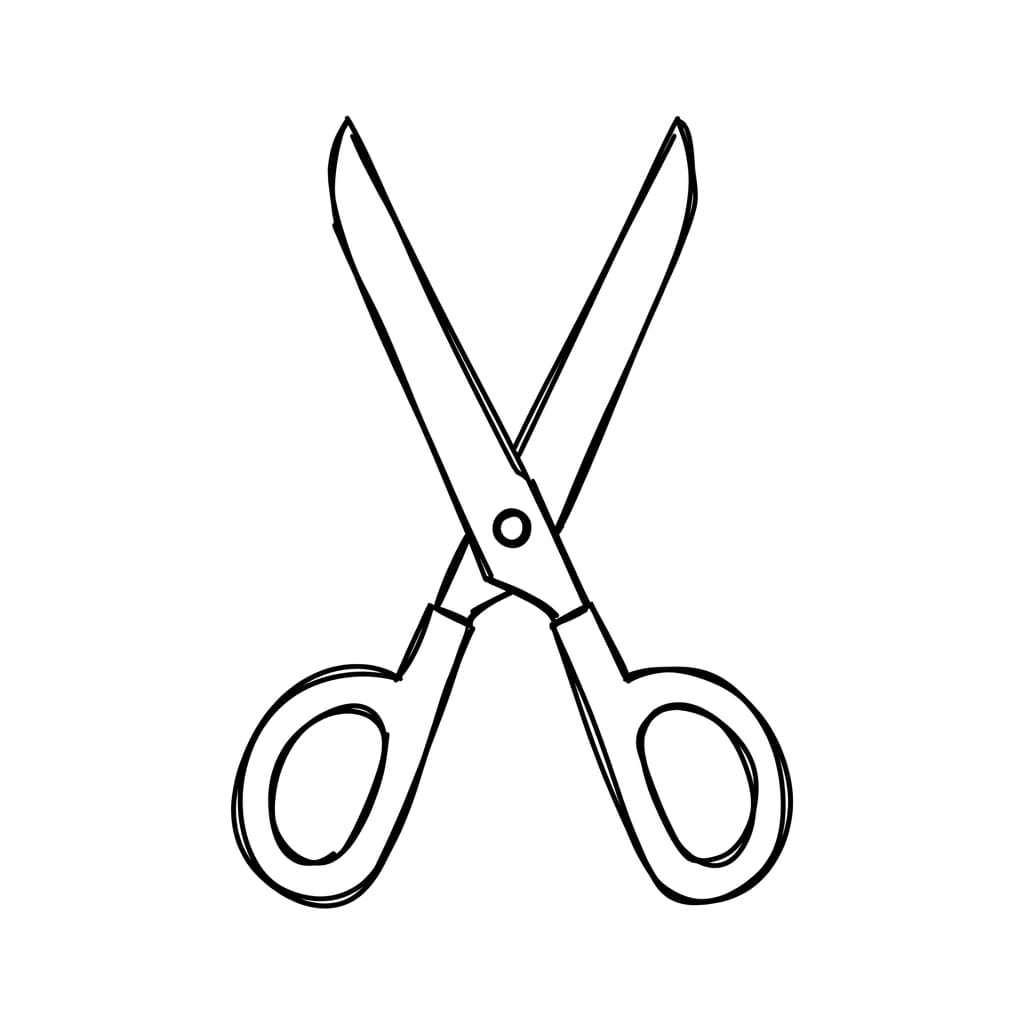
Ever draw something too small and regret it instantly? Yeah, me too.
Blow up your proportions. Fill half the page with one giant pair of scissors. Round those handles like cozy little rainbows. Make the blades almost comically short or long—doesn’t matter.
Oversized proportions forgive wobbly lines because the whole thing reads as stylized.
This idea works great for kids, absolute beginners, or anyone who needs a confidence boost. Big shapes = big wins.
4. The Travel-Ready Tiny Scissors
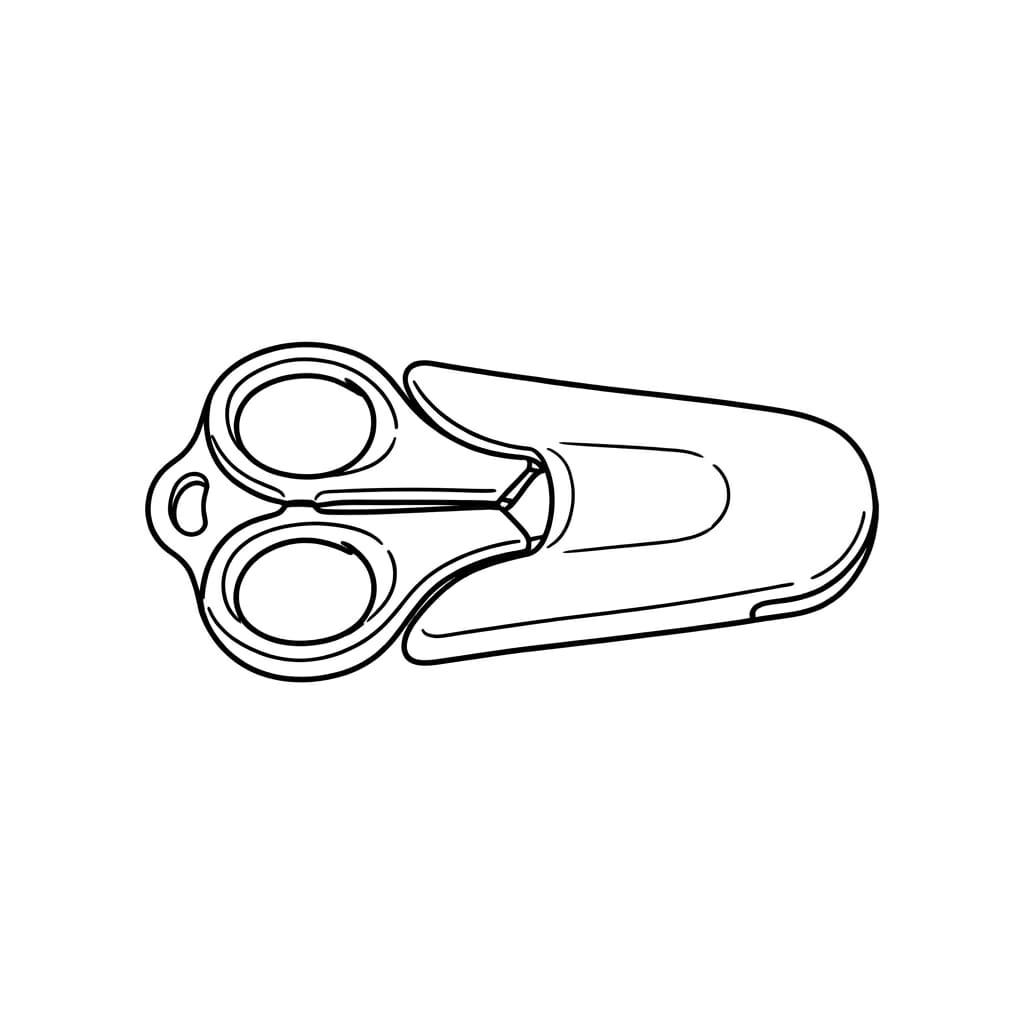
Now shrink everything down. Draw a folded pair of travel scissors—you know, the kind that lives in a sewing kit or a camping pouch.
Closed and compact, these look like a little metal butterfly resting.
The challenge here involves capturing the folded hinge without adding extra detail. Use the fewest lines possible. Can you tell what it is with just five strokes?
Try it. I bet you can.
5. Open Wide and Say “Ahh”
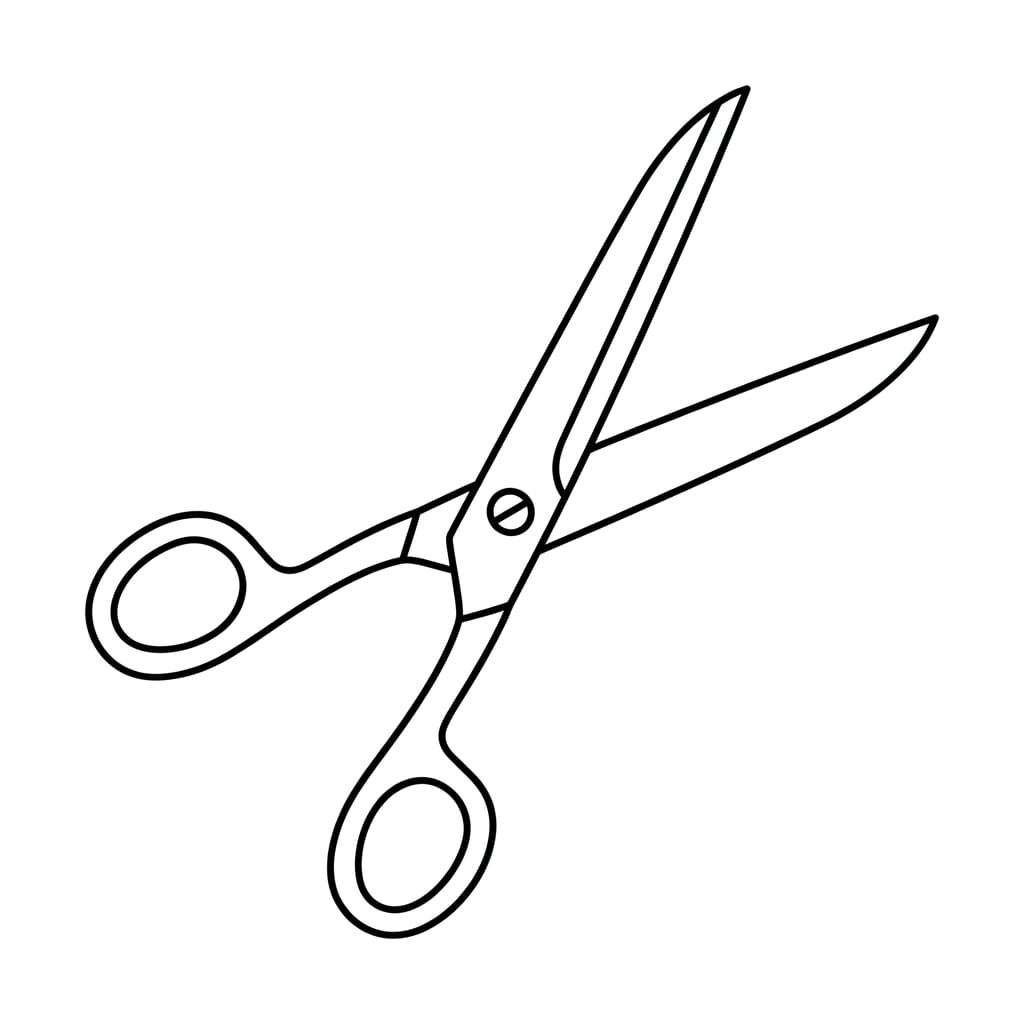
Instead of facing you straight on, turn your scissors slightly. Draw those blades spread wide open like they’re about to snip something important.
The angle adds a touch of realism without requiring actual realistic drawing skills. You’re still using simple outlines, but now you’re thinking about perspective. Fancy, right?
6. Three Peas in a Pod
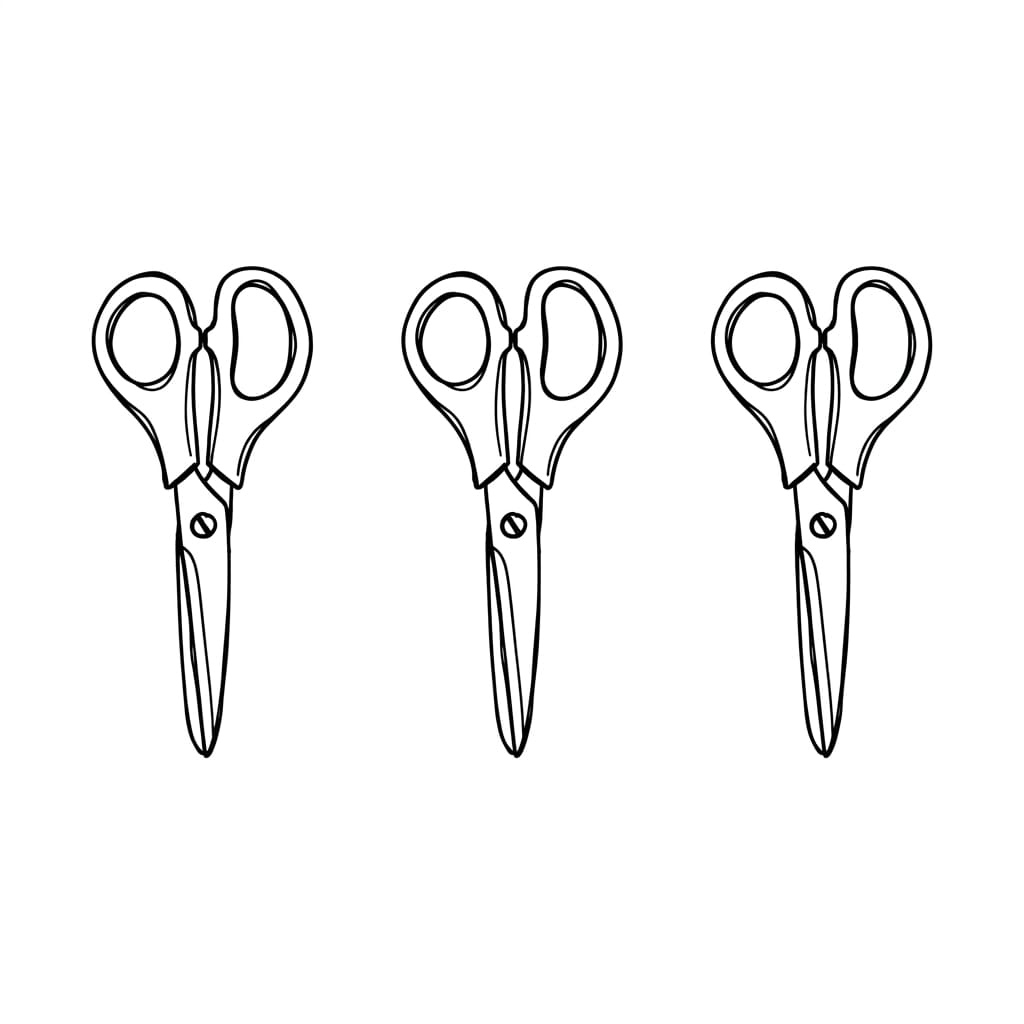
Here’s a drawing exercise disguised as a doodle challenge.
Draw three identical scissors in a perfect row. Sounds easy until you try it. Your hand naturally wants to make each one slightly different. The left one might tilt. The middle one might stretch. The right one? Who knows.
Fight that urge. Focus on repetition. This builds muscle memory faster than any single drawing ever could.
7. Snip, Snap, Snip
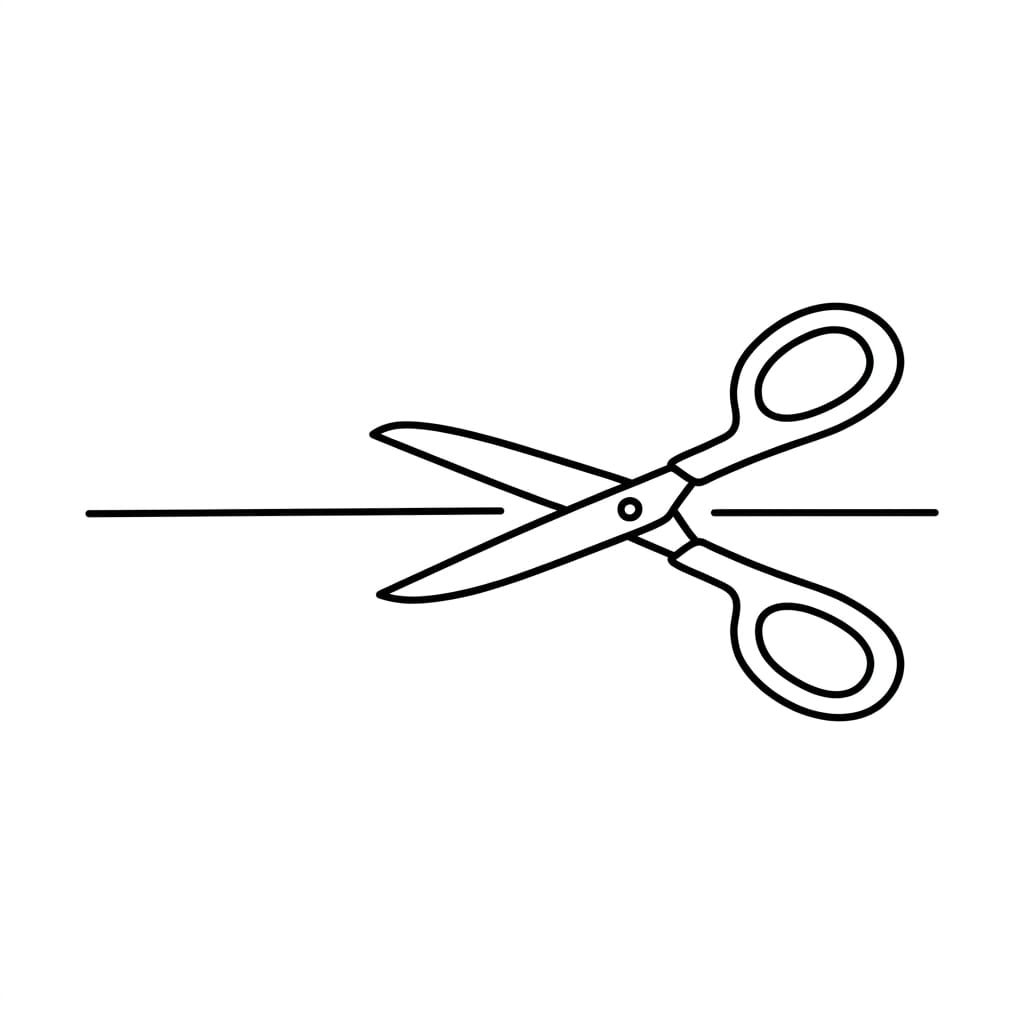
No paper. No confetti. No zigzag edges. Just scissors performing the act of cutting an invisible line.
Draw the blades partially closed, as if they’ve just met in the middle of a snip. This captures a moment of action without needing to show what they’re cutting. Your brain fills in the rest.
IMO, this is the most satisfying doodle on the entire list. Something about mid-action scissors feels alive.
Playing With Layouts and Little Details
Ready to move beyond single scissors? Good. Because these next ideas get playful.
8. The Cartoon Chonk
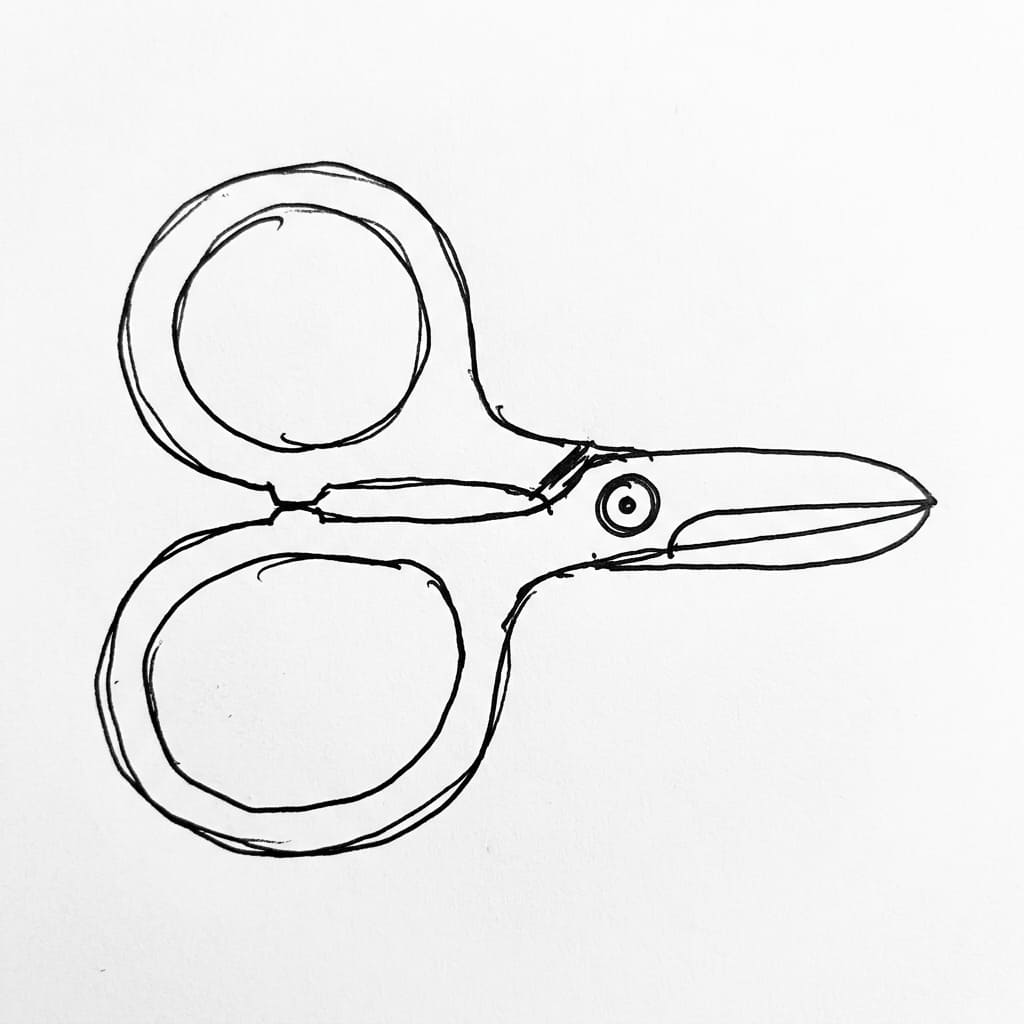
Let’s get silly.
Exaggerate the finger holes until they look like giant circles. Make the blades stubby and cute. This gives your scissors personality—almost like a character rather than a tool.
I draw these when I feel bored with “correct” proportions. Rules exist to be broken, right? Especially in doodling.
9. Top-Down Symmetry Practice
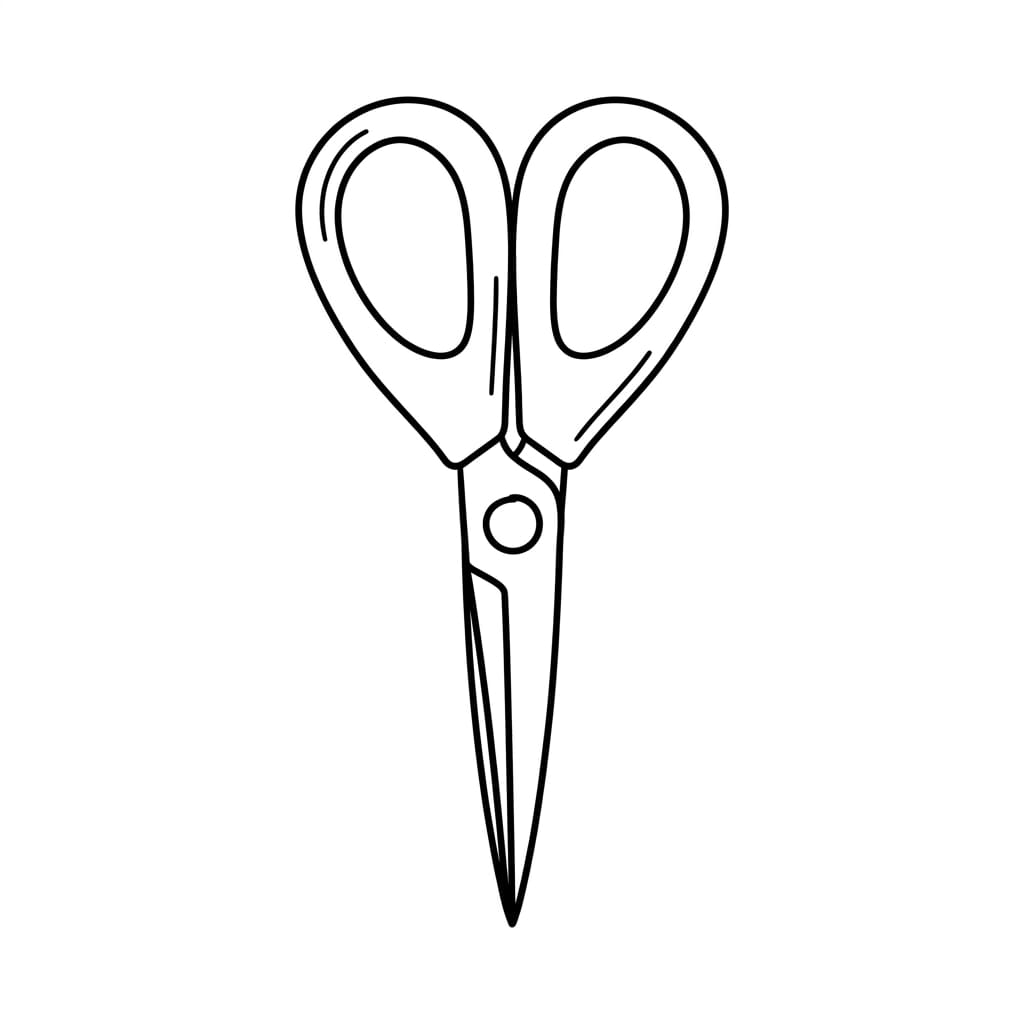
Look at your scissors from directly above. They’re closed. They’re symmetrical. And they’re a fantastic test of your observation skills.
Every curve on the left needs a matching curve on the right. Sounds simple. Your hand will disagree. That’s why we practice.
10. Kitchen Duty
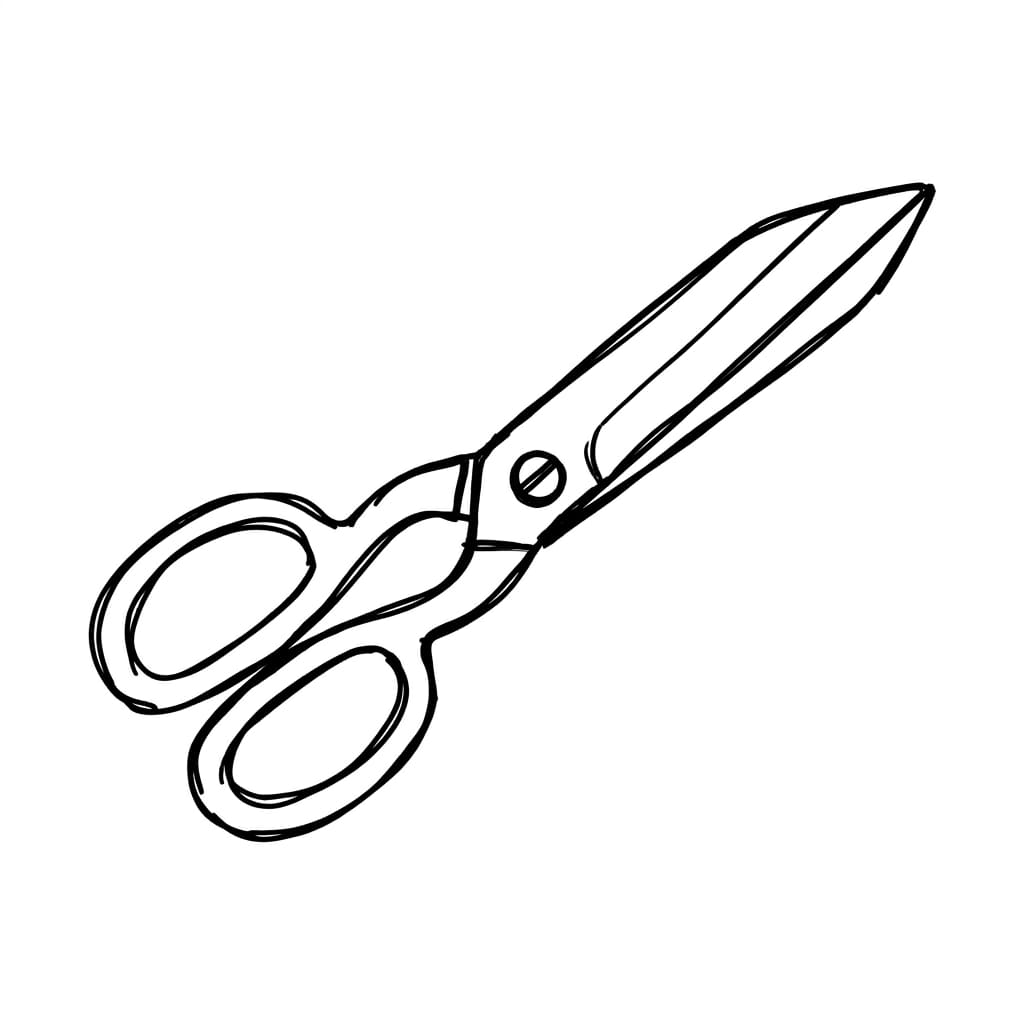
Kitchen scissors look different from office scissors. They pack thicker blades and often have larger, sturdier handles.
Draw these to teach yourself that not all scissors look the same. Small variations—a wider blade here, a chunkier handle there—turn generic doodles into specific, interesting drawings.
11. The Scatter Method
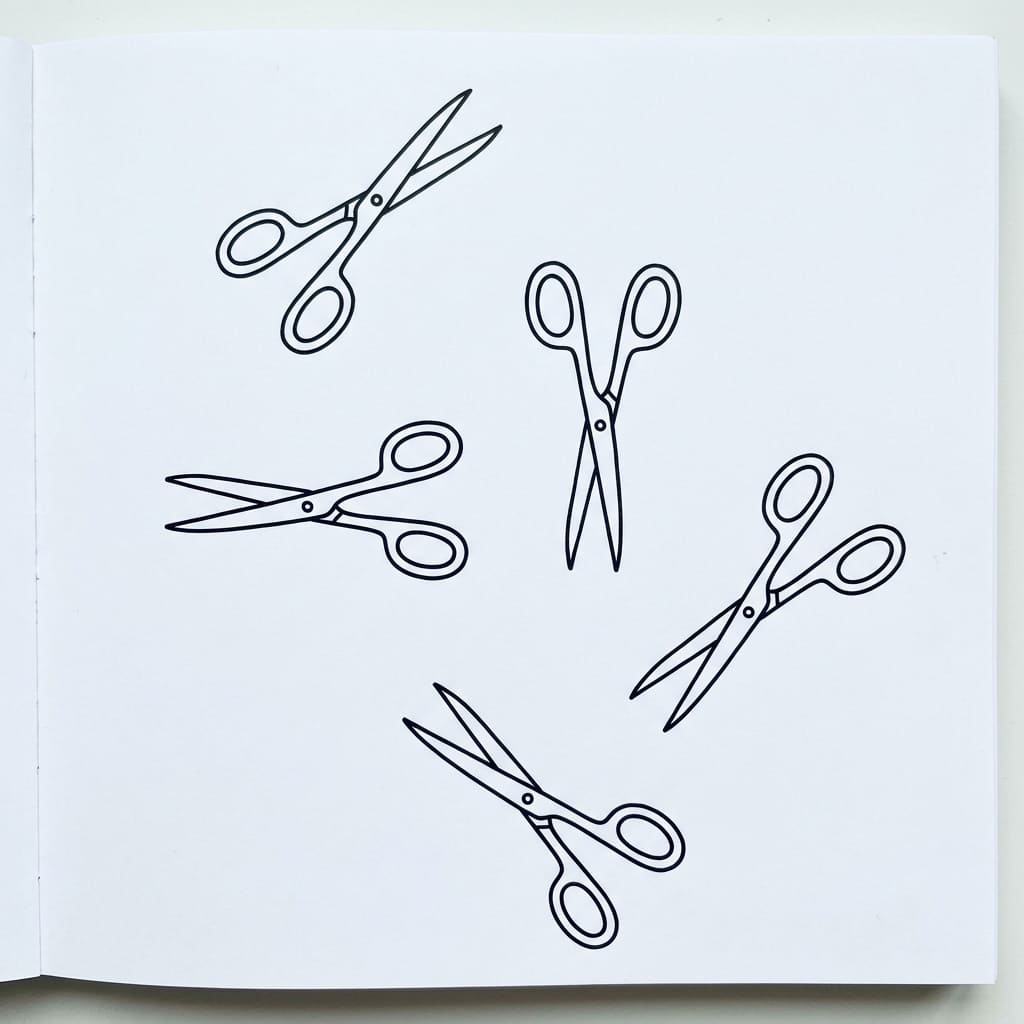
Forget order. Forget alignment. Draw five little scissors floating randomly across your page like confetti.
This works wonders when you feel stuck. The randomness removes pressure. You’re not composing a masterpiece—you’re just sprinkling tiny scissors around like a happy little maniac.
12. Hang In There
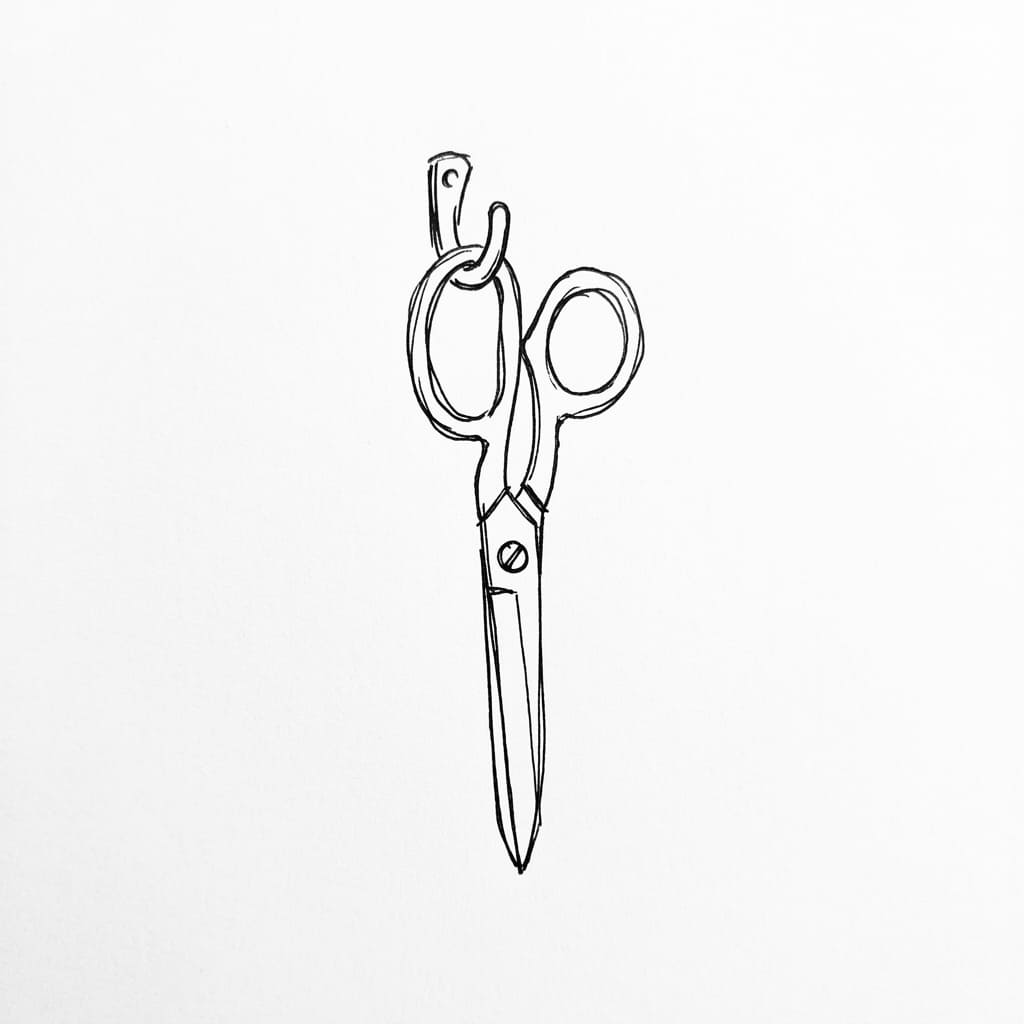
Add one tiny extra element: a hook.
Draw a simple hook shape, then hang your scissors from it. This creates a minimal scene without turning into a full illustration. You’re still drawing scissors—you just gave them a place to live.
Ever notice how adding context makes simple drawings feel 10x more finished?
Final Stretch (You’ve Got This)
Almost there. These last three ideas will really show off what you’ve learned.
13. Curves Ahead
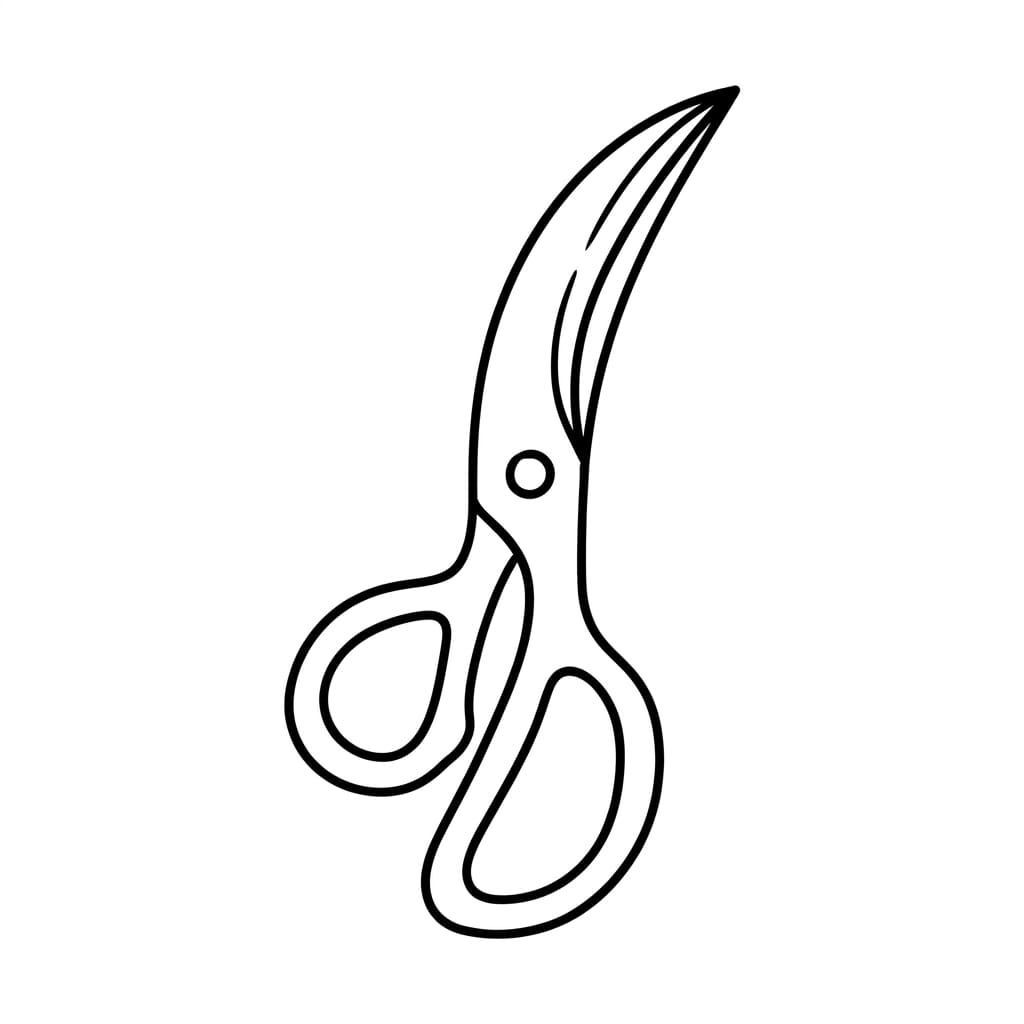
Straight blades? Predictable. Curved blades? Now we’re talking.
Draw stylized curved-blade scissors—the kind used for fabric or gardening. The swooping lines feel different under your pen. More elegant. More fluid.
This one’s my personal favorite when I want to impress non-drawing friends. They always say, “Whoa, that looks cool.” And I just smile and nod.
14. Mid-Action Magic
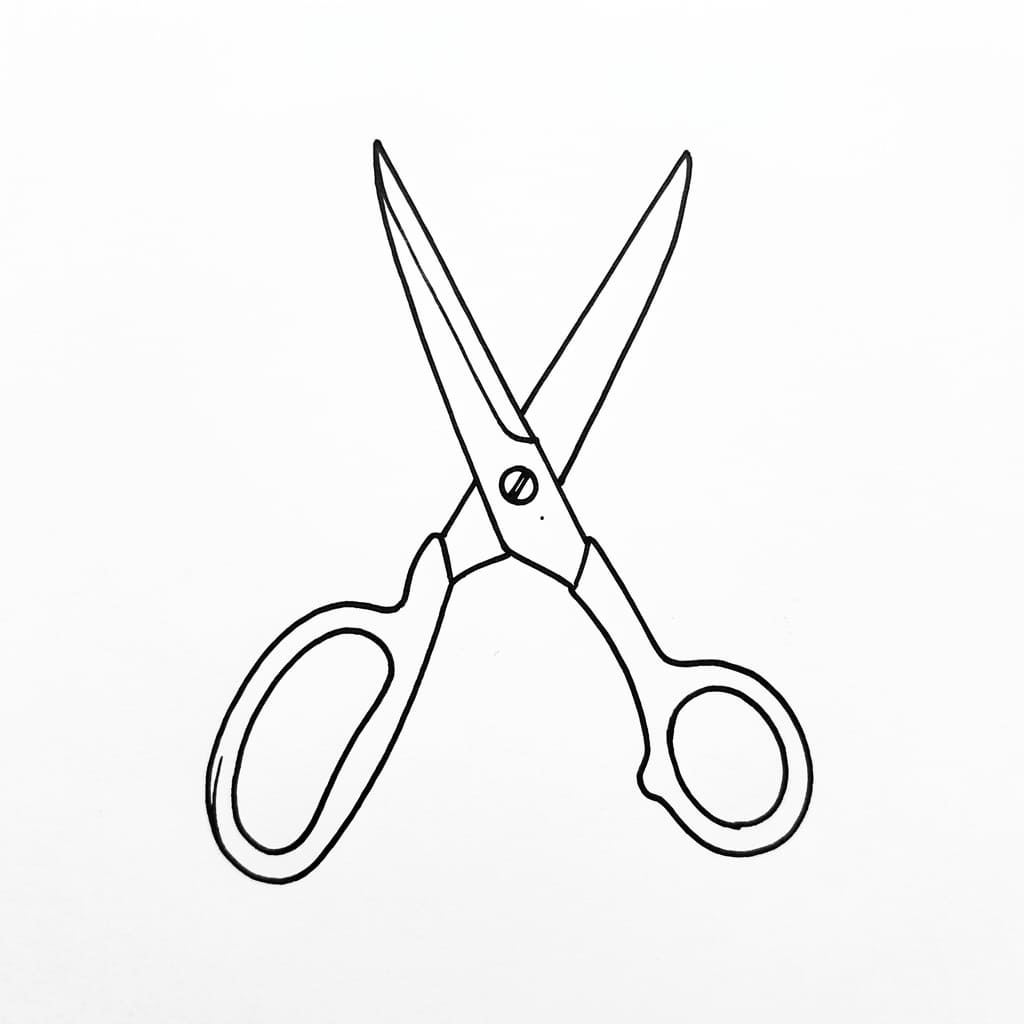
You drew open scissors earlier. You drew closed scissors. Now meet in the middle.
Capture the exact moment when scissors feel most ready to work—partially open, blades forming a sharp angle, poised and alert. This drawing has energy. Use bold, confident lines to sell that energy.
15. The Family Portrait
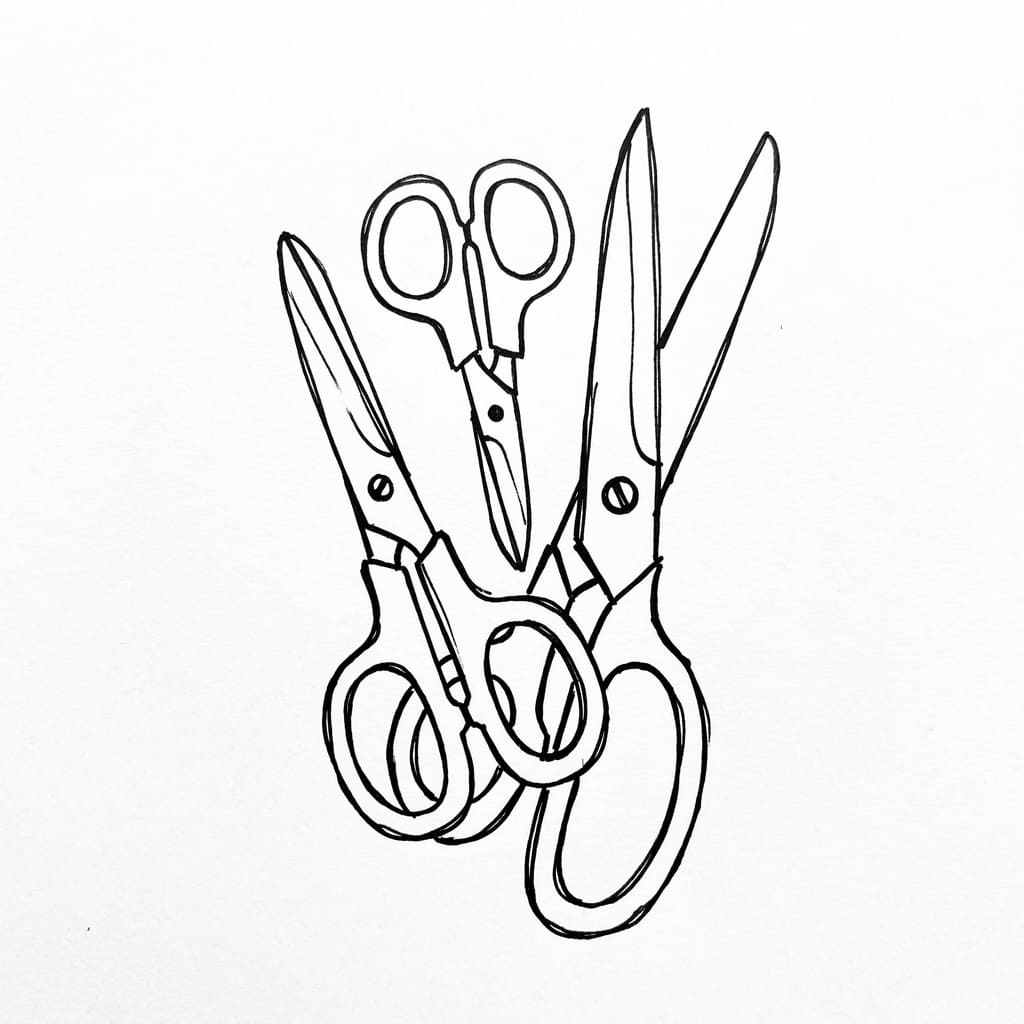
End with a group photo.
Draw three scissors of different sizes clustered together. One tiny, one medium, one large. Vary the shapes slightly—maybe one has round handles, another has angular ones.
This brings together everything you practiced: symmetry, proportion, variation, and composition. Plus, it looks adorable. A whole scissor family just hanging out on your page.
Turning These Doodles Into a Daily Habit
You’ve got 15 ideas. Now what?
Draw one per day. That’s it. Fifteen days from now, you’ll have a full page of scissors, and your hand will move more confidently than ever before.
Keep your drawings small—two inches max. Small drawings feel less intimidating. Use whatever pen you have. Ballpoint, fineliner, even a pencil if that’s your thing.
Here’s what I do: I keep a tiny sketchbook next to my coffee maker. While my coffee brews, I draw one scissor doodle. Ninety seconds. Done. By Friday, I’ve got five drawings and slightly better hand control.
No pressure. No perfectionism. Just scissors.
Why Simplicity Wins Every Time
Here’s a truth that took me way too long to learn: Simple drawings connect with people more than complex ones.
A clean black line drawing on a white background reads clearly. No shading means no clutter.
No patterns means nothing distracts from your actual lines. Your audience sees exactly what you drew—no interpretation needed.
Plus, simplicity travels better. Post these doodles on social media? They’ll look crisp. Print them in a zine? Perfect. Use them as embroidery patterns? Go for it.
Complexity impresses. But simplicity sells. And more importantly, simplicity keeps you drawing instead of giving up halfway through a shading nightmare.
Final Thoughts (And a Tiny Dare)
Look, I’m not going to pretend these 15 scissor drawings will turn you into the next Picasso. But will they make you a better doodler? Absolutely.
Will they unlock a weirdly specific skill that impresses exactly the right kind of people? You bet.
So here’s my dare: Open your sketchbook right now. Pick any idea from this list—maybe #7, the cutting motion one, or #11, the scattered five. Draw it badly. Seriously. Draw it messy and fast and imperfect.
Then draw it again. Slightly better.
Then again.
Before you know it, those scissors will look sharp. (Last pun, I promise.)
Now go grab your pen. Your blank page isn’t going to fill itself.
One Comment