15 Pencil Drawing Ideas: Sketch Different Types of Pencils
Ever notice how artists spend hours drawing landscapes, animals, and portraits… yet completely ignore the tool sitting in their own hand?
Yeah, I did the same thing for years.
Then one afternoon I looked at my desk, saw a pile of pencils, and thought, “Wait… these actually make great drawing subjects.” They have interesting shapes, textures, and little mechanical details that make them surprisingly fun to sketch.
So if you want easy object drawing practice, pencils themselves make perfect subjects. They’re simple, familiar, and packed with character.
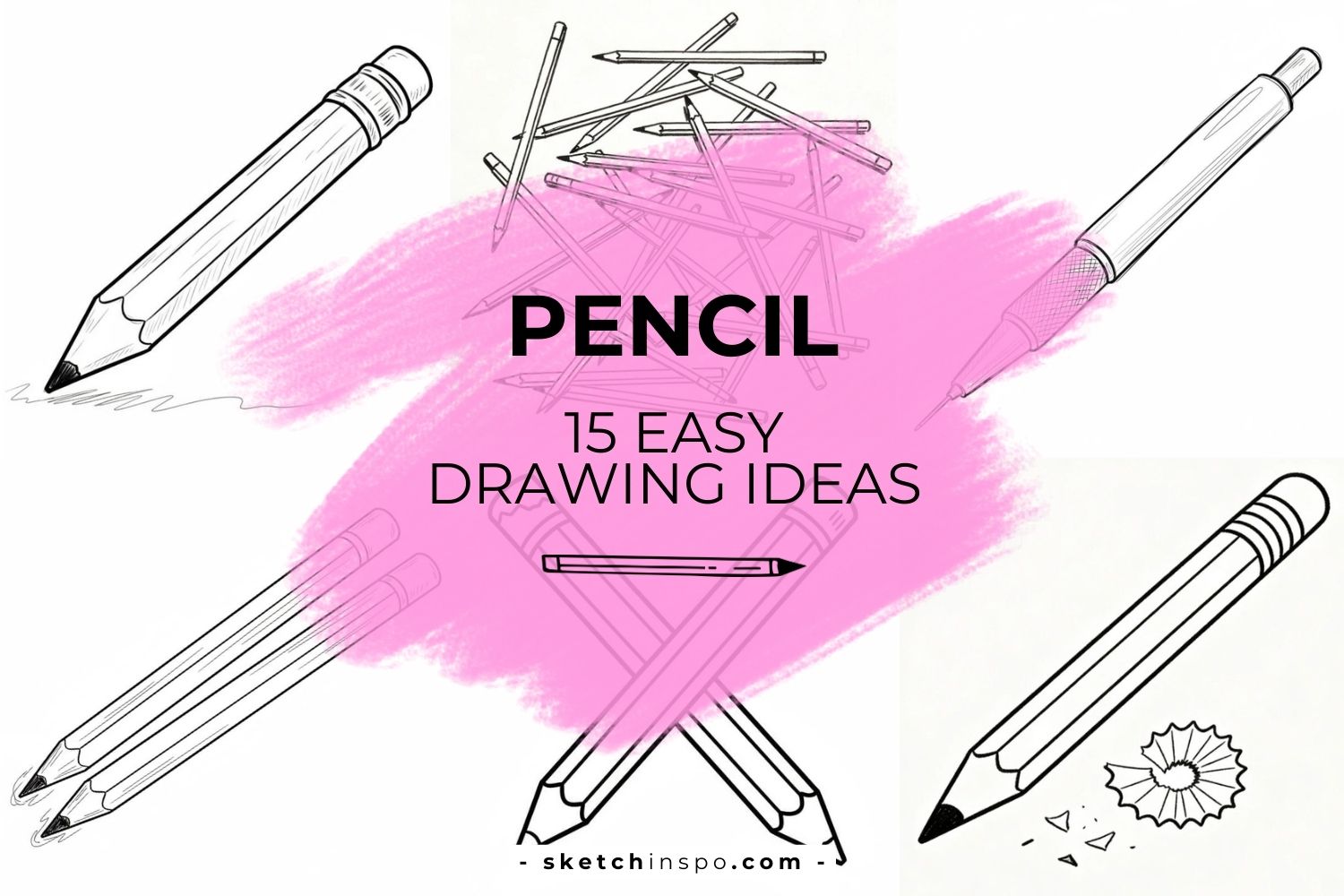
In this guide, I’ll walk you through 15 pencil drawing ideas that are perfect for beginners. Each one focuses on simple hand-drawn sketch style, clean black line drawing, white background, no color, and minimal detail.
In other words, you get great practice without spending three hours shading something.
Sound good? Let’s start sketching.
Why Drawing Pencils Makes Great Practice
Before we jump into the ideas, let’s talk about something interesting.
When you draw pencils, you practice several important beginner skills at once:
- Straight lines and symmetry
- Simple perspective
- Small mechanical details
- Clean line control
And honestly? Pencils don’t complain if you mess up. Try drawing a face wrong and suddenly your portrait looks like it saw a ghost. Draw a pencil wrong and… it’s still a pencil.
IMO, that makes them perfect practice objects.
1. Classic Graphite Pencil
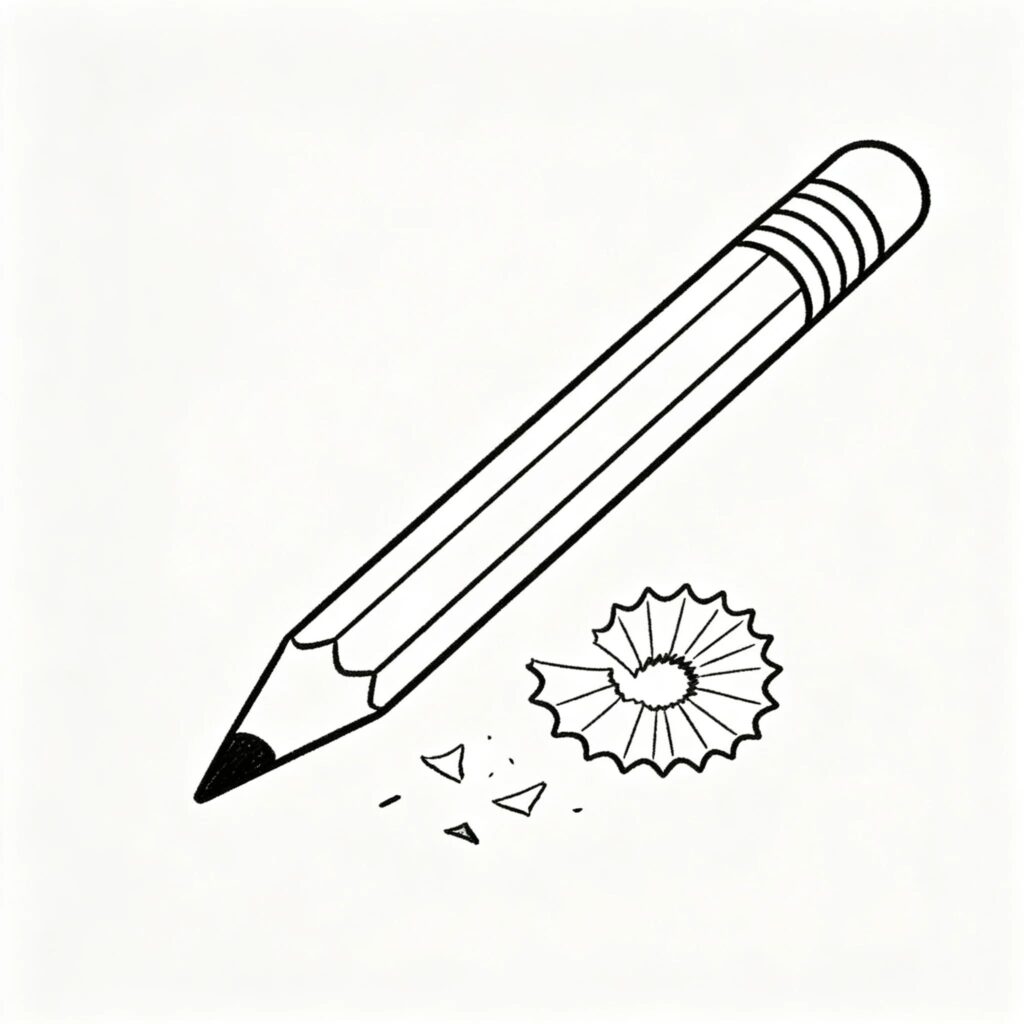
Graphite Pencil with Shavings
Start with a classic graphite pencil with a few loose graphite shavings beside it.
Draw the pencil with a simple hand-drawn sketch style and clean black line drawing. Keep the design minimal with no shading, no color, and a white background.
Why this works well:
- The hexagonal pencil shape builds line control.
- The shavings add visual interest without complexity.
- You practice small curved lines.
I love starting with this one because it feels nostalgic. Ever sharpen a pencil too much in school? Yeah… same energy 🙂
2. Charcoal Pencil
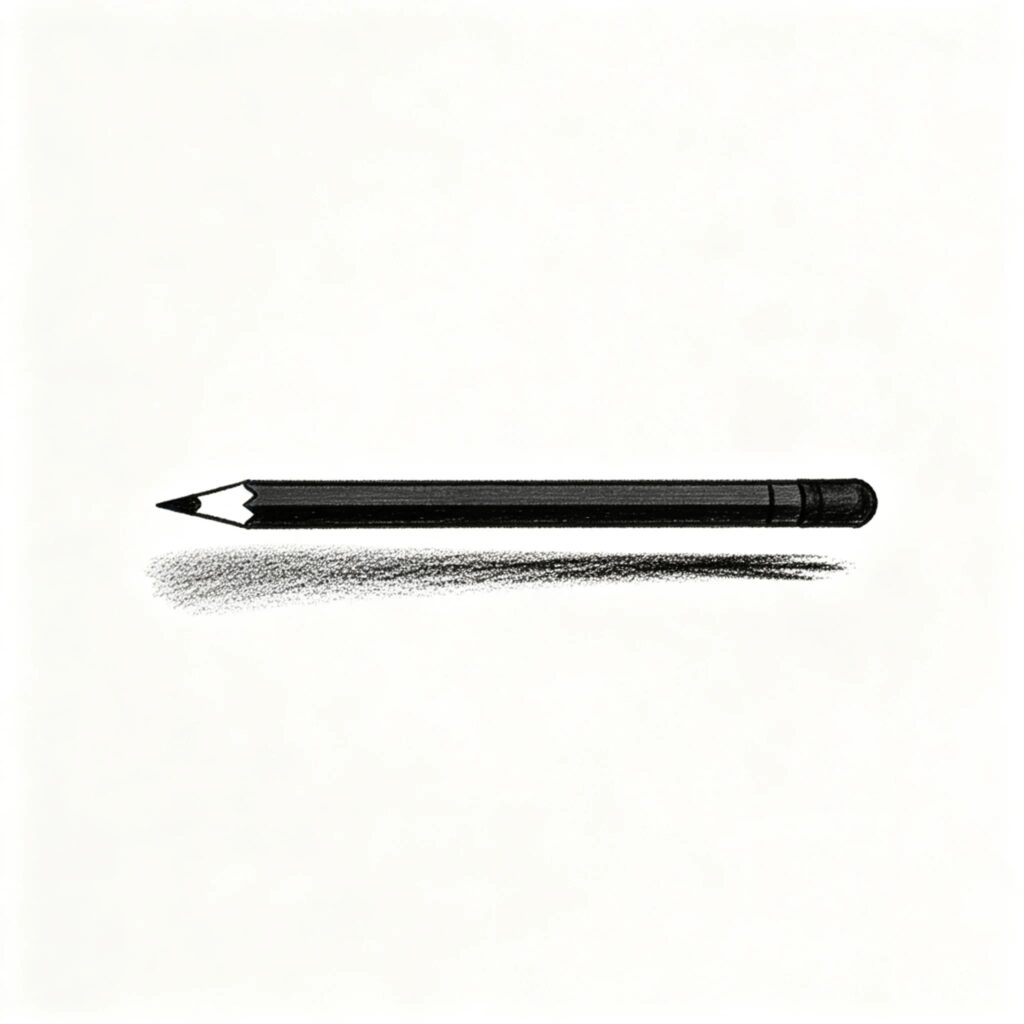
Charcoal Pencil with a Smudge
Next, sketch a charcoal pencil beside a soft smudge mark.
Use a simple black line drawing style with minimal detail and no color.
This idea works great because the smudge hint tells a story. It looks like someone just used the pencil and left evidence behind.
Plus, charcoal pencils often have slightly different barrel designs, which makes them visually interesting.
Ever noticed how charcoal always finds a way onto your fingers? Yeah… that’s not just me, right?
3. Colored Pencils
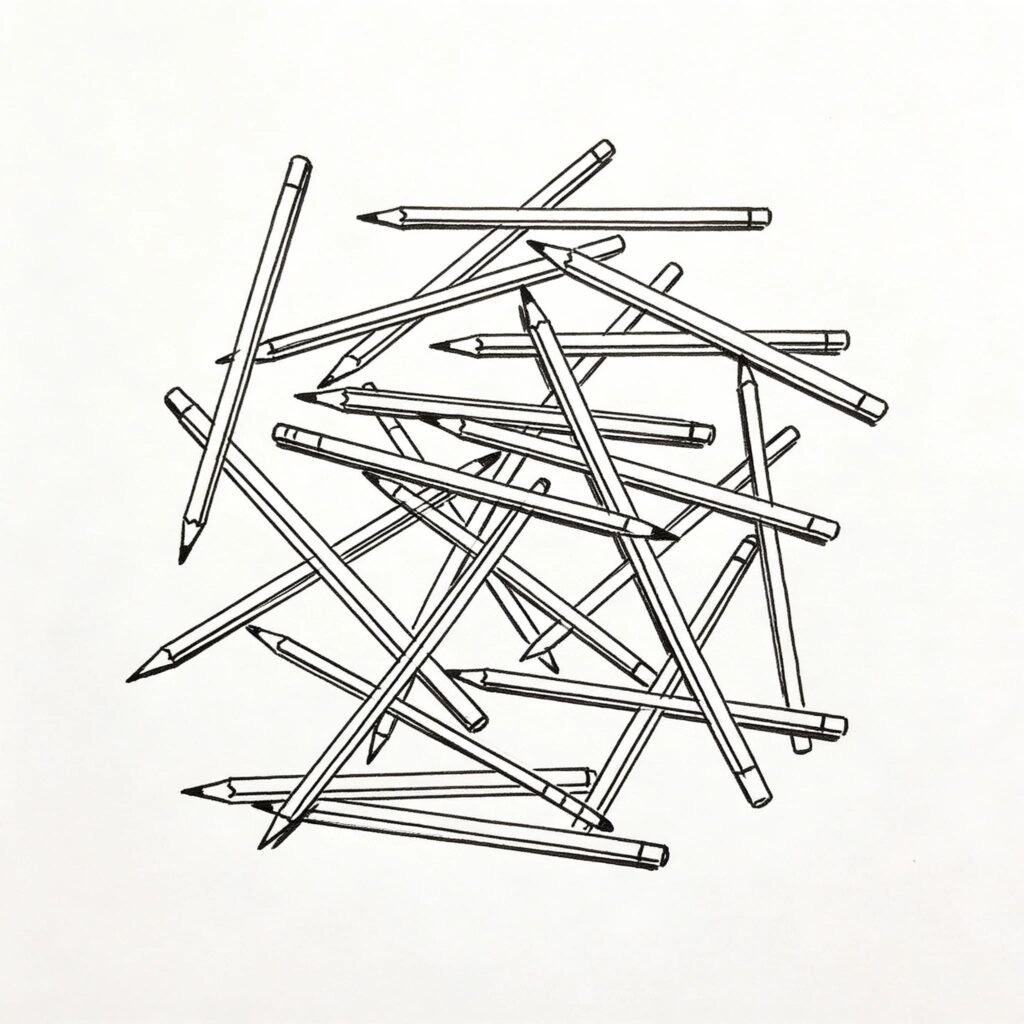
Scattered Like Pick-Up Sticks
Now try drawing colored pencils loosely scattered like pick-up sticks.
Even though the real pencils are colorful, keep the drawing black line only with no color or shading.
Why this one works:
- It introduces overlapping shapes.
- You practice composition balance.
- It still stays simple.
This sketch feels casual and playful, which keeps the drawing from looking stiff.
FYI, messy arrangements often look more natural than perfect alignment.
4. Mechanical Pencil
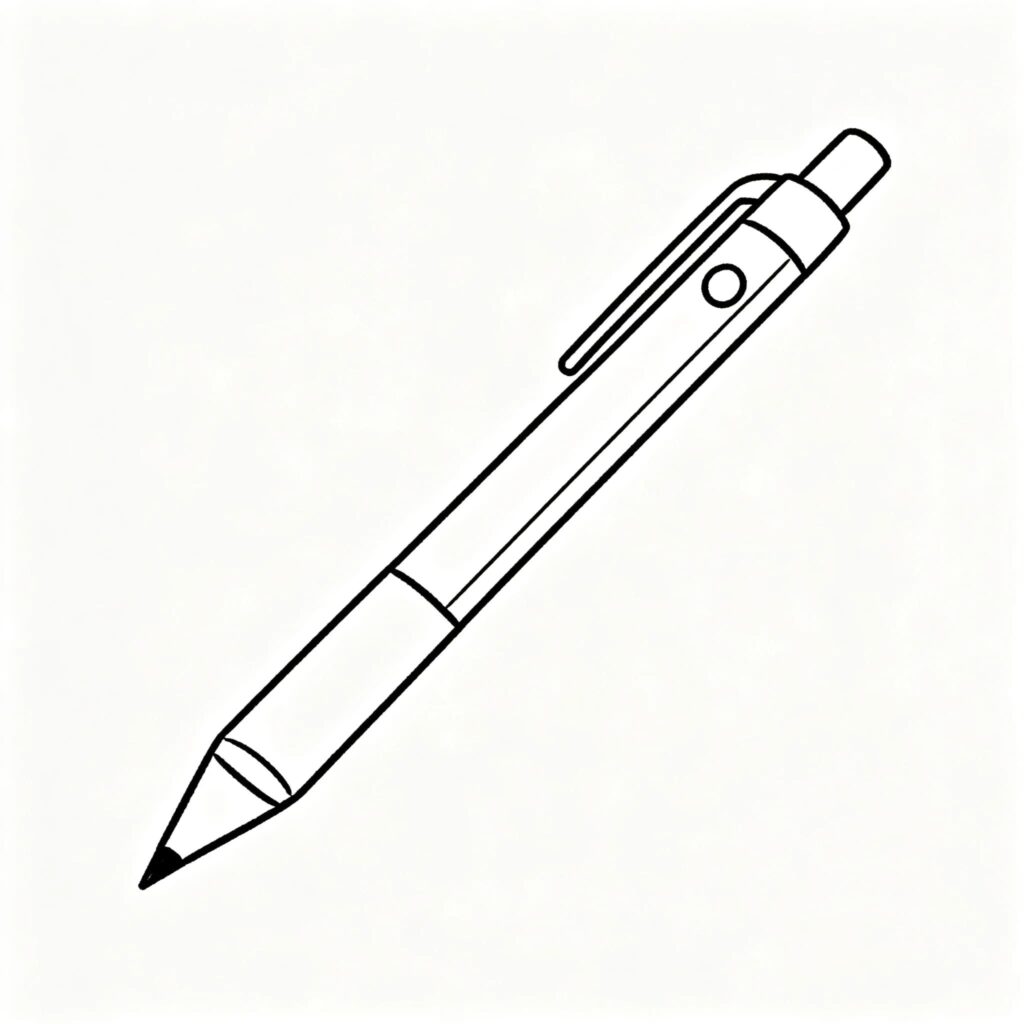
Mechanical Pencil with Eraser Cap
Next up: a mechanical pencil with a visible eraser cap and small click button.
Draw it using clean black line art with minimal detail.
Mechanical pencils give you something traditional pencils don’t:
tiny mechanical features.
Focus on details like:
- The clip
- The click button
- The lead tip
These small parts make the drawing feel more technical and interesting.
Ever click a mechanical pencil repeatedly for no reason? Yeah… artists do that a lot.
5. Watercolor Pencils
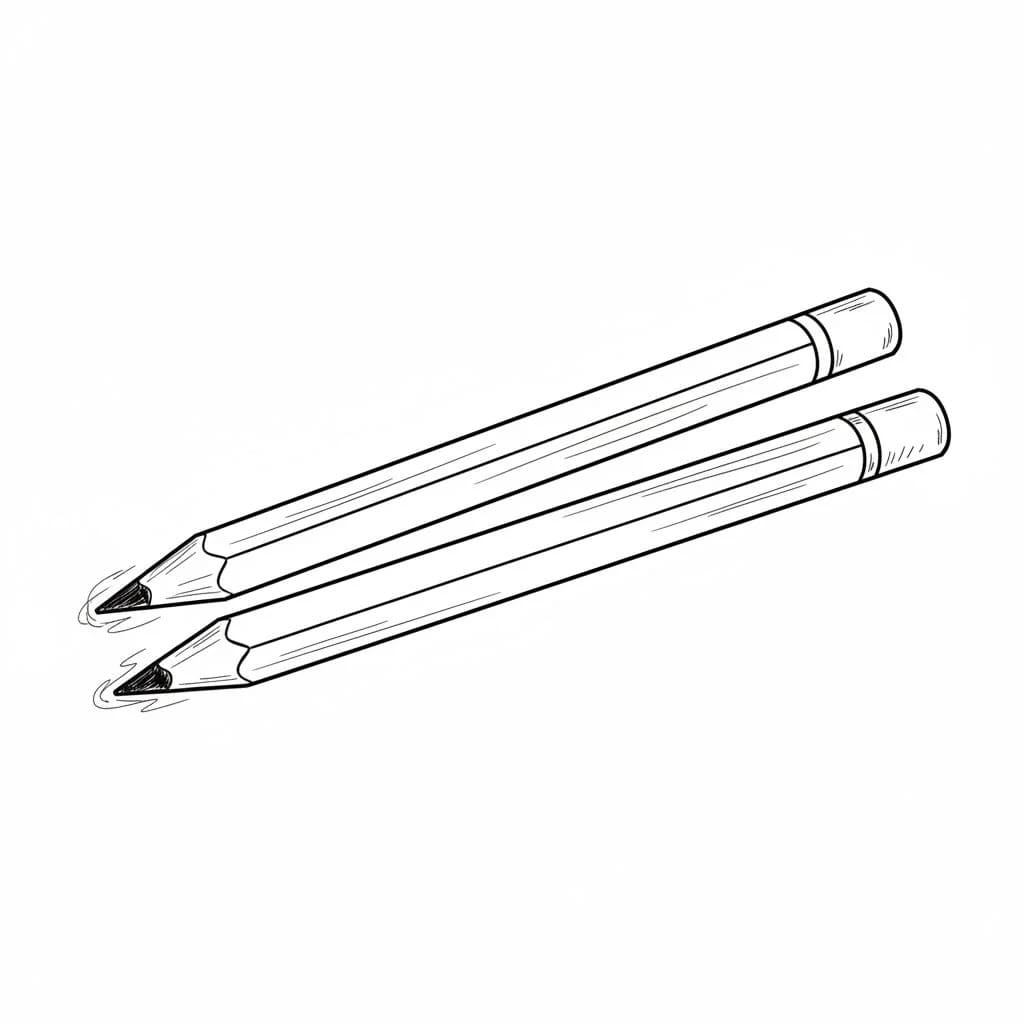
Two Overlapping Watercolor Pencils
Sketch two watercolor pencils gently overlapping.
Keep the drawing simple, minimal, and black line only.
This design works well because:
- Overlapping objects add depth.
- You practice parallel alignment.
- The composition stays simple.
Watercolor pencils often have slightly thicker bodies, which makes them easier to draw.
Also, overlapping objects instantly make sketches feel more dynamic.
6. Pastel Pencil
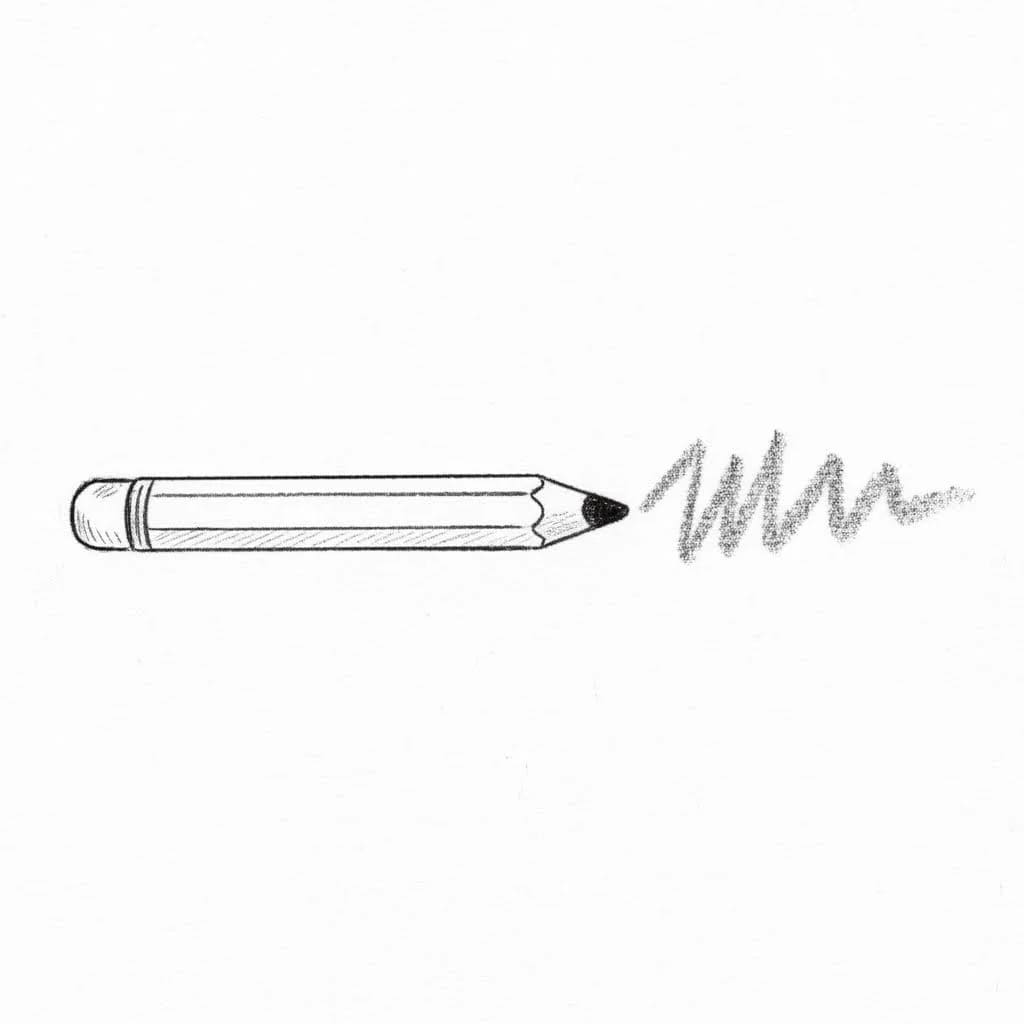
Pastel Pencil with Powdery Line
Now draw a pastel pencil beside a soft powdery line.
Again, stick to simple black line art, minimal detail, and no shading.
Pastel pencils usually look slightly softer and chalk-like, which gives the drawing personality.
Focus on:
- The rounded tip
- The soft edge lines
Small details like this help distinguish different pencil types.
7. Chalk Pencil
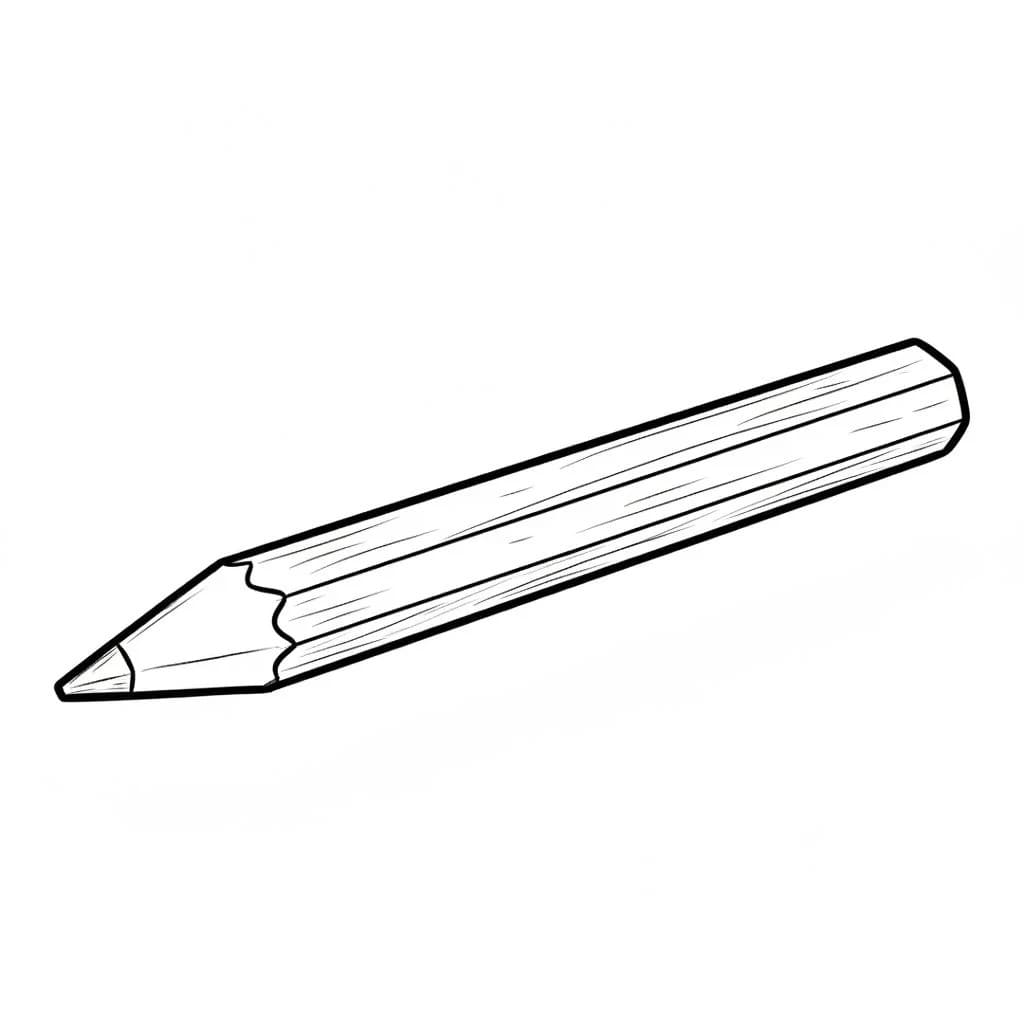
Squared Tip Chalk Pencil
Try drawing a single chalk pencil with a squared tip for broad strokes.
Keep the style simple and clean with black lines only.
The squared tip adds something interesting:
shape variation.
Most pencils have pointed tips, so this one immediately stands out.
Ever tried drawing with chalk pencils? They feel completely different from graphite.
8. Clutch Pencil
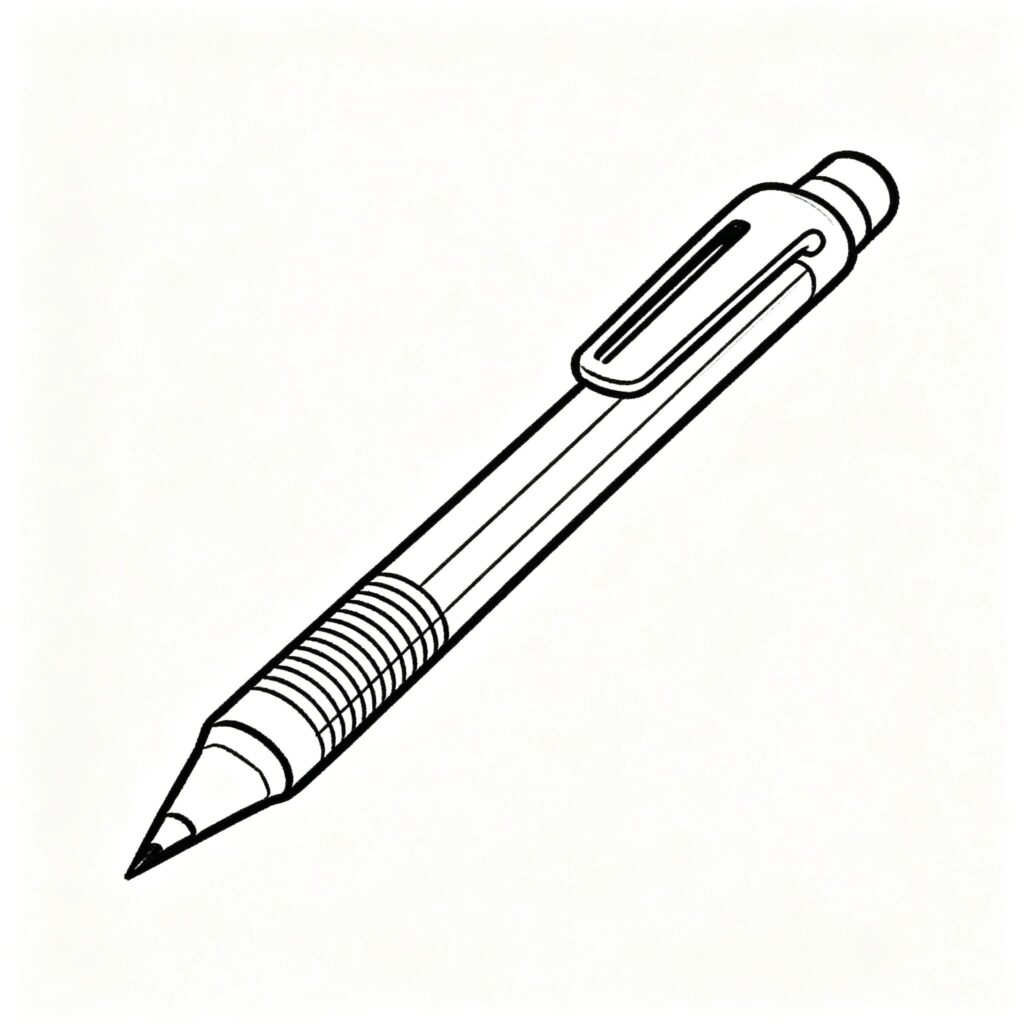
Clutch Pencil with Lead Mechanism
Now sketch a clutch pencil with a wide grip and visible lead holder mechanism.
Draw it in minimal black line style with no color or shading.
Clutch pencils look slightly more industrial.
Focus on these parts:
- Thick grip area
- Metal lead holder
- Simple cylindrical body
They look simple at first, but the mechanical structure gives the sketch character.
9. Erasable Colored Pencils
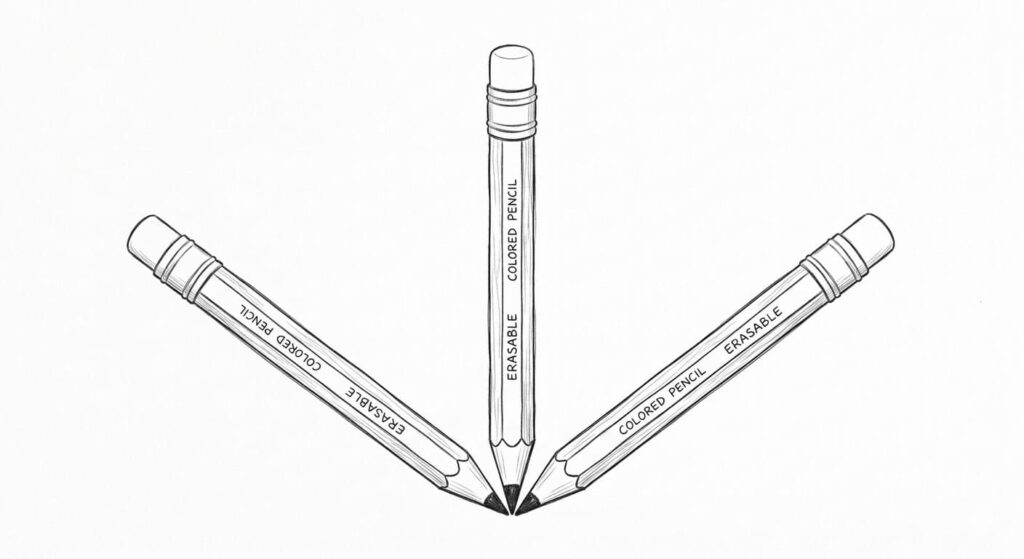
Three Erasable Colored Pencils Fanned Out
Next, draw three erasable colored pencils fanned outward with erasers visible.
Use clean black line drawing and minimal detail.
This layout works well because:
- The fan shape creates movement.
- You practice consistent spacing.
- The erasers add extra visual detail.
Honestly, the eraser ends make them look slightly goofy… but in a charming way 🙂
10. Lead Holder
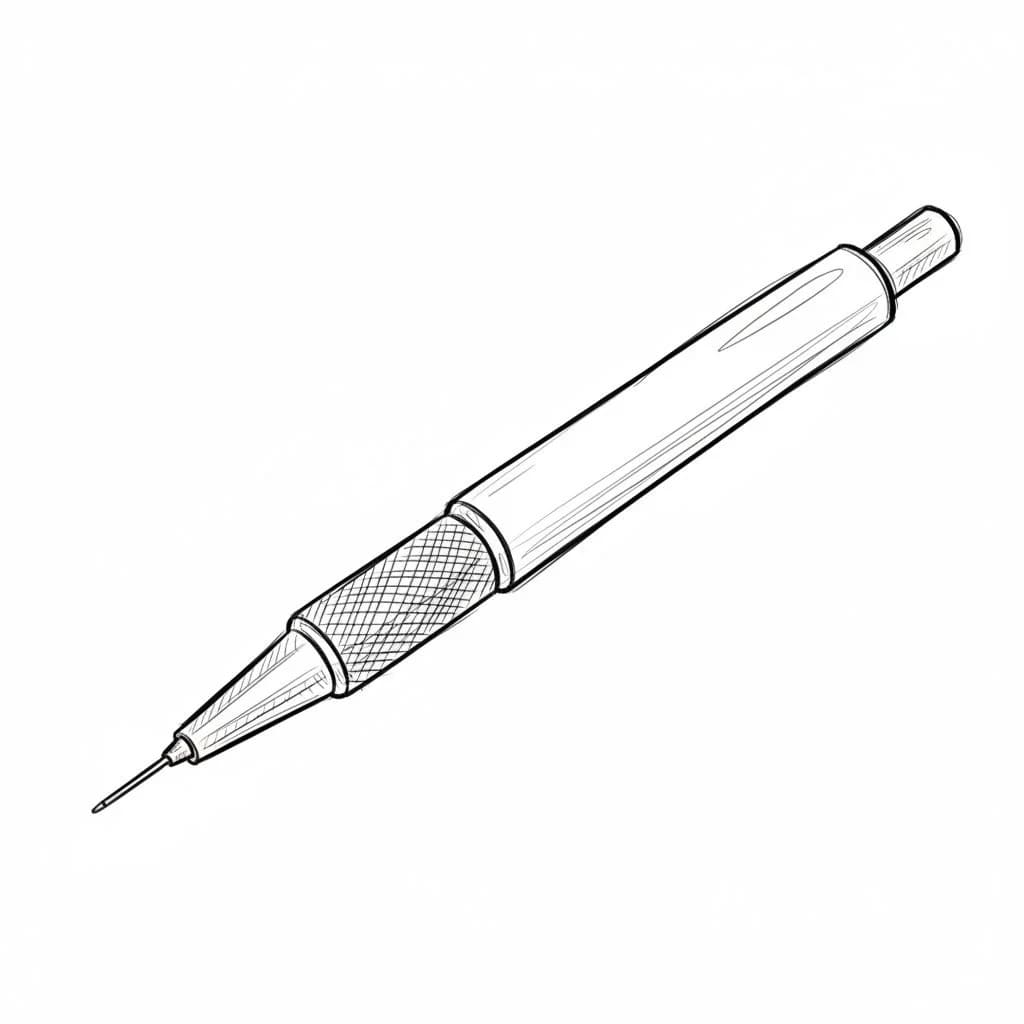
Lead Holder with Metal Grip
Now try drawing a lead holder with a metal grip and extended lead tip.
Keep the design minimal with black line art only.
Lead holders resemble mechanical pencils but often look more professional and technical.
Important features to capture:
- Textured metal grip
- Long lead tip
- Simple cylindrical body
Artists who sketch a lot often love these tools.
11. Non-Reproduction Pencil
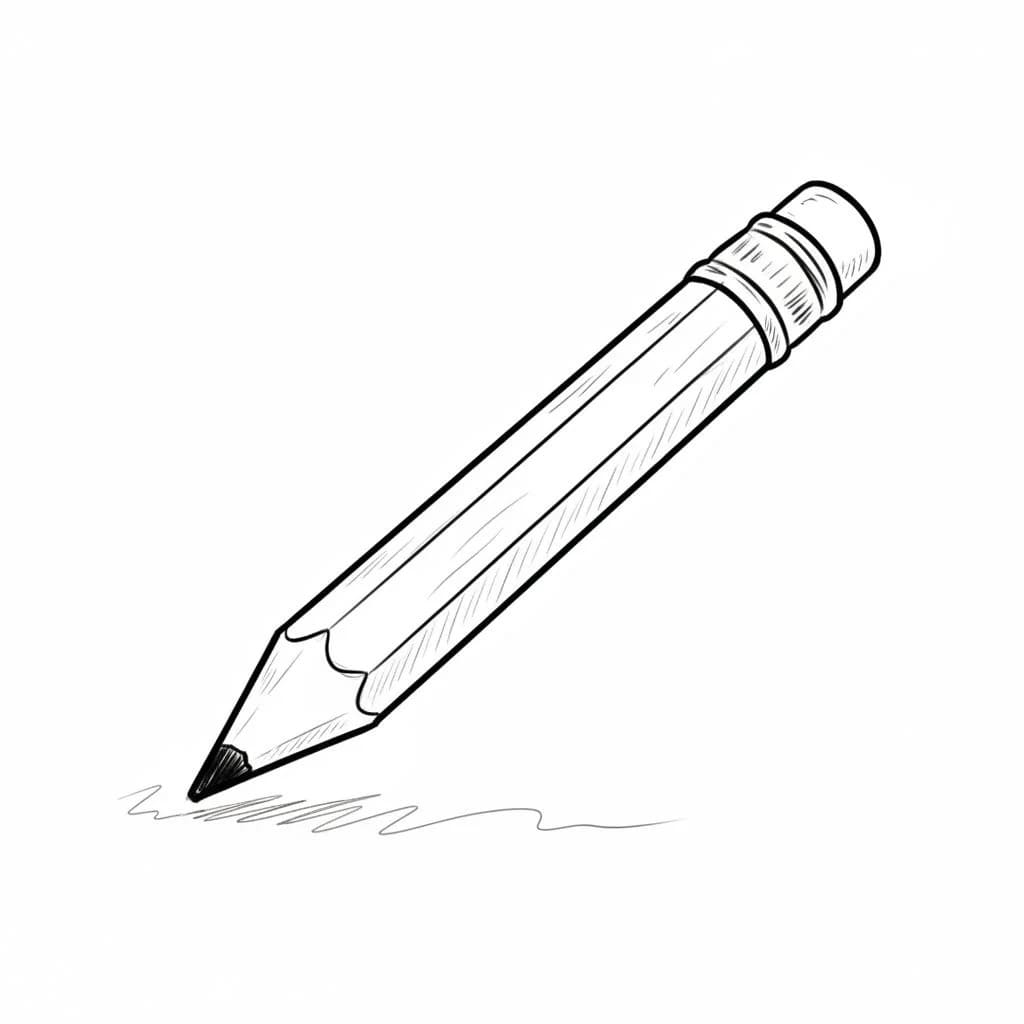
Non-Reproduction Pencil with Visible Core
Now try sketching a non-reproduction pencil with a visible core at the tip.
Draw it in a simple hand-drawn sketch style with clean black line drawing, minimal detail, white background, and no color or shading.
Non-reproduction pencils have an interesting history. Designers and illustrators once used them to make marks that photocopiers wouldn’t reproduce clearly. Pretty clever, right?
Focus on these simple elements when drawing it:
- Clean wooden barrel shape
- Visible core at the sharpened tip
- Minimal label lines
You don’t need complicated detail here. A few confident lines create a sketch that still looks authentic.
Ever drawn something so light the scanner barely noticed it? That’s basically the superpower of this pencil.
12. Copying Pencil
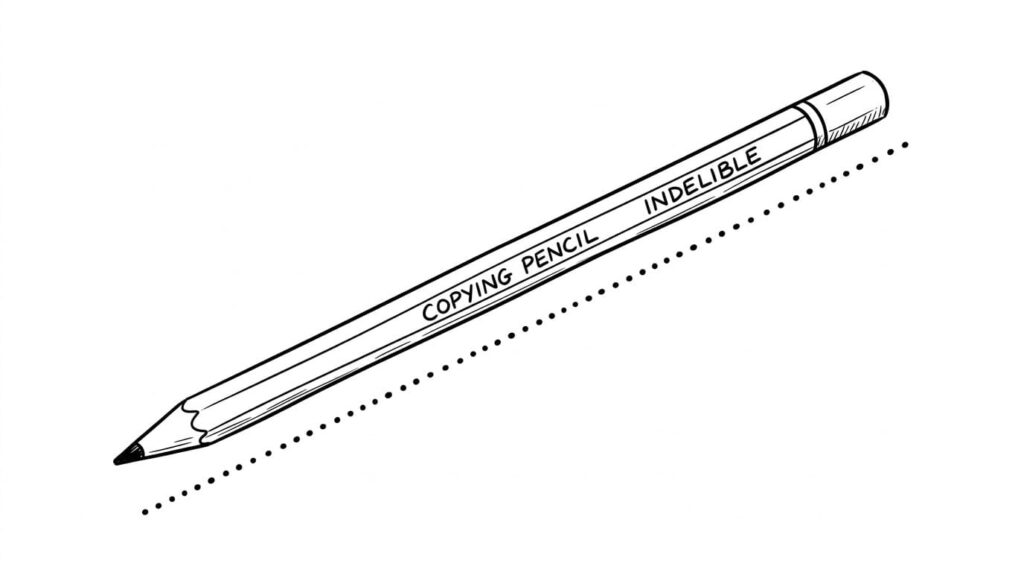
Copying Pencil with Dotted Line
Next, sketch a copying pencil beside a simple dotted line.
Draw it in simple hand-drawn style with black line art and no shading.
Copying pencils historically created indelible marks, which made them useful for documents.
Adding the dotted line suggests how the pencil might be used, which adds a storytelling element.
Small storytelling details make sketches feel more alive.
13. Carpenter’s Pencil
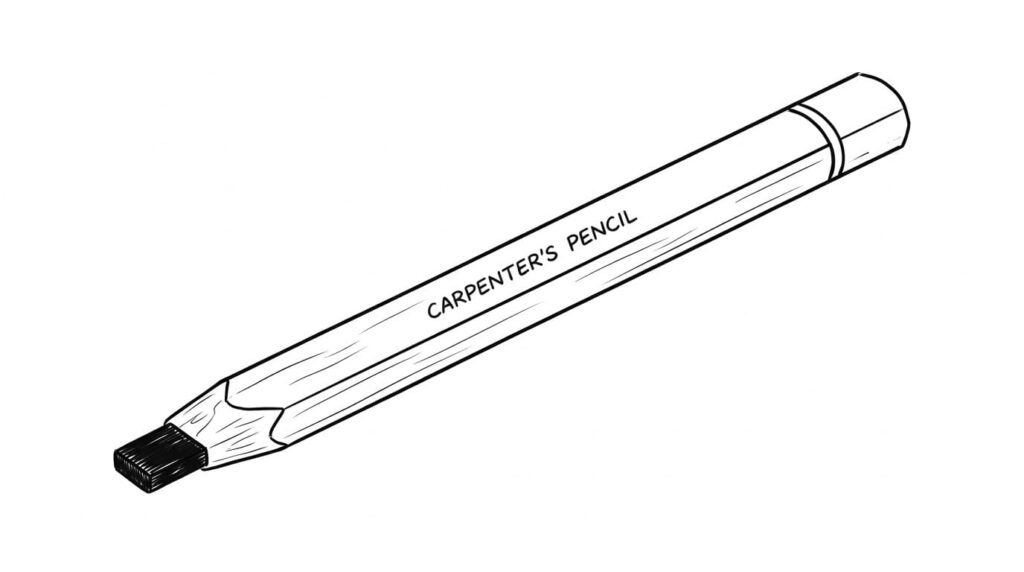
Flat Carpenter’s Pencil
Now draw a flat carpenter’s pencil with a rectangular core exposed.
This one stands out immediately because of its flat shape.
Keep the style minimal black line drawing with no color or shading.
Things to focus on:
- Wide rectangular body
- Flat edges
- Exposed core
This pencil shape prevents rolling, which makes it popular for construction.
And yes, it also makes a fun drawing subject.
14. Grease Pencils
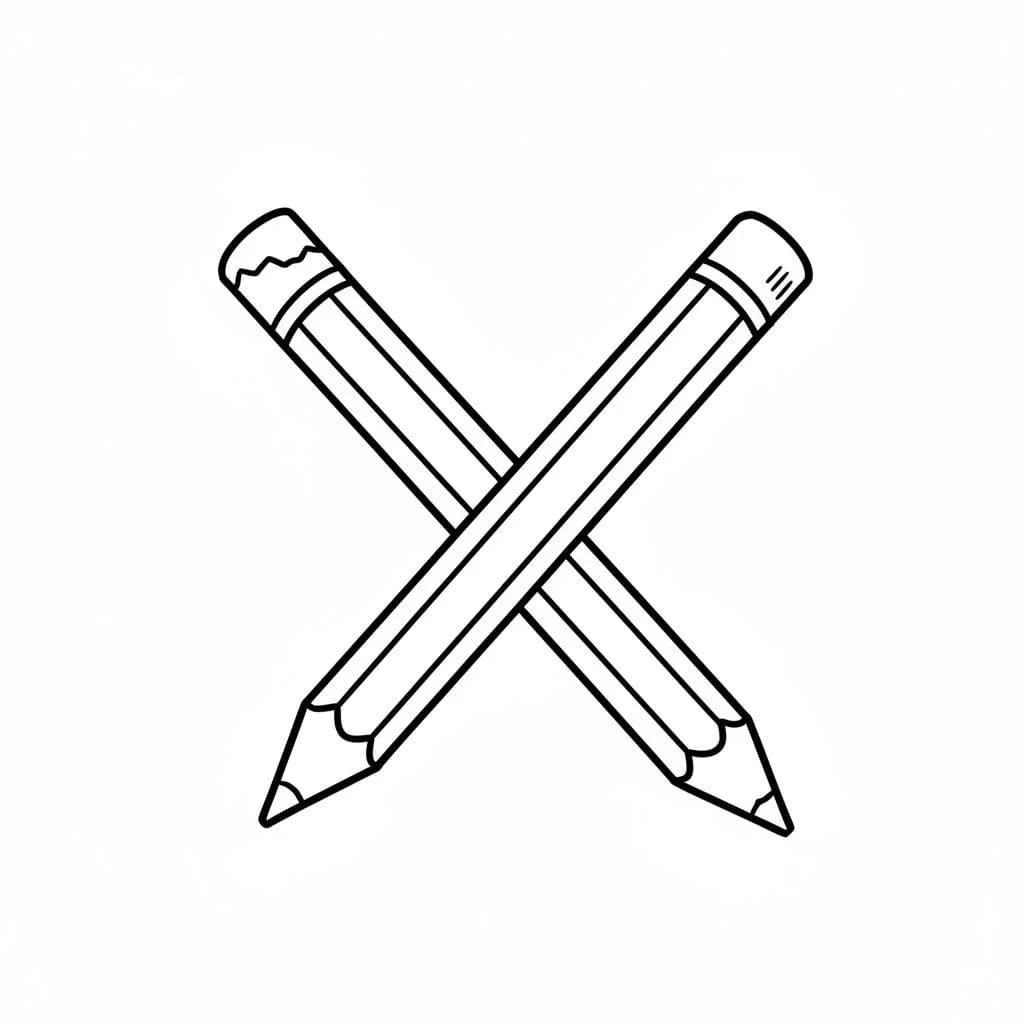
Crossed Grease Pencils
Sketch two grease pencils crossed with one having a flat worn tip.
Use simple black line drawing on a white background.
Grease pencils often have:
- paper wrappers
- chunky bodies
- flat tips
These features make them visually different from standard pencils.
The crossed layout also creates strong composition balance.
15. Carbon Pencil
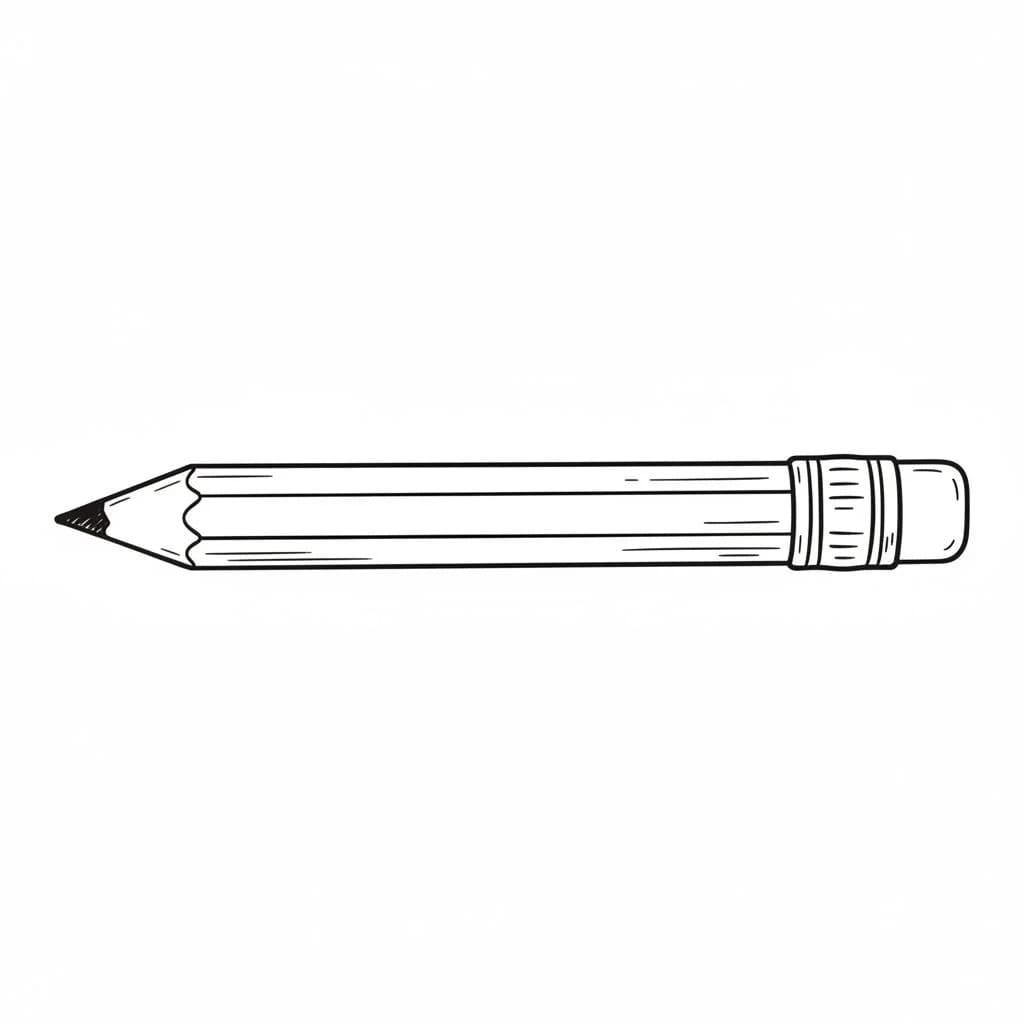
Simple Carbon Pencil Outline
Finally, draw a carbon pencil lying flat with a clean outline.
Keep it extremely simple:
- Black line drawing
- Minimal detail
- White background
- No color or shading
Carbon pencils often produce deep dark marks, but the design itself stays minimal.
Sometimes the simplest sketches look the best.
Ever notice how clean line drawings feel oddly satisfying?
Quick Tips for Drawing Pencil Objects
Before you start sketching all fifteen ideas, keep these simple tips in mind.
Tip 1. Keep Lines Clean
Focus on confident strokes instead of sketchy scribbles.
Clean lines instantly make drawings look more polished.
Tip 2. Use Reference
Look at real pencils around your desk.
You’ll notice small design differences between brands.
Tip 3. Don’t Overthink It
Seriously.
These drawings should stay quick and simple practice sketches.
You’re not preparing for a museum exhibition… at least not today 🙂
Final Thoughts
Drawing pencils might sound boring at first.
But once you start sketching them, you’ll realize something surprising: they’re actually great drawing subjects.
You practice:
- Line control
- Object proportions
- Simple composition
- Mechanical details
And best of all, these sketches stay quick, simple, and beginner-friendly.
So grab a pencil… and ironically, start drawing pencils.
Who knows? You might end up with a sketchbook full of art tools. And honestly, that’s a pretty cool collection.