From Basic to Creative: 15 Easy Hammer Drawing Ideas
Ever sit down with a pen, ready to draw… and your brain just goes, “Nope”? Yeah, same. That’s exactly why I started sketching super simple objects—like hammers. Not glamorous, I know. But surprisingly fun? Absolutely.
If you want easy drawing ideas that don’t stress you out, hammer doodles are a solid place to start. They’re simple, geometric, and super forgiving. Mess up a line? Congrats, you just invented a “custom tool design.”
Let’s walk through 15 easy hammer drawing ideas, from basic to slightly more creative. I’ll keep things relaxed, practical, and beginner-friendly—like we’re just sketching together over coffee.
Why Hammer Doodles Are Perfect for Beginners
Before we jump in, let me ask you something: why start with something as random as a hammer?
Simple answer—it’s easy to break down into basic shapes.
Think about it:
- A rectangle for the head
- A line (or slightly curved shape) for the handle
- Maybe a claw curve if you’re feeling fancy
That’s it. No anatomy. No complicated proportions. No “why does this look weird?” spiral.
IMO, hammer doodles are one of the fastest ways to build confidence in sketching. You learn control without overthinking it.
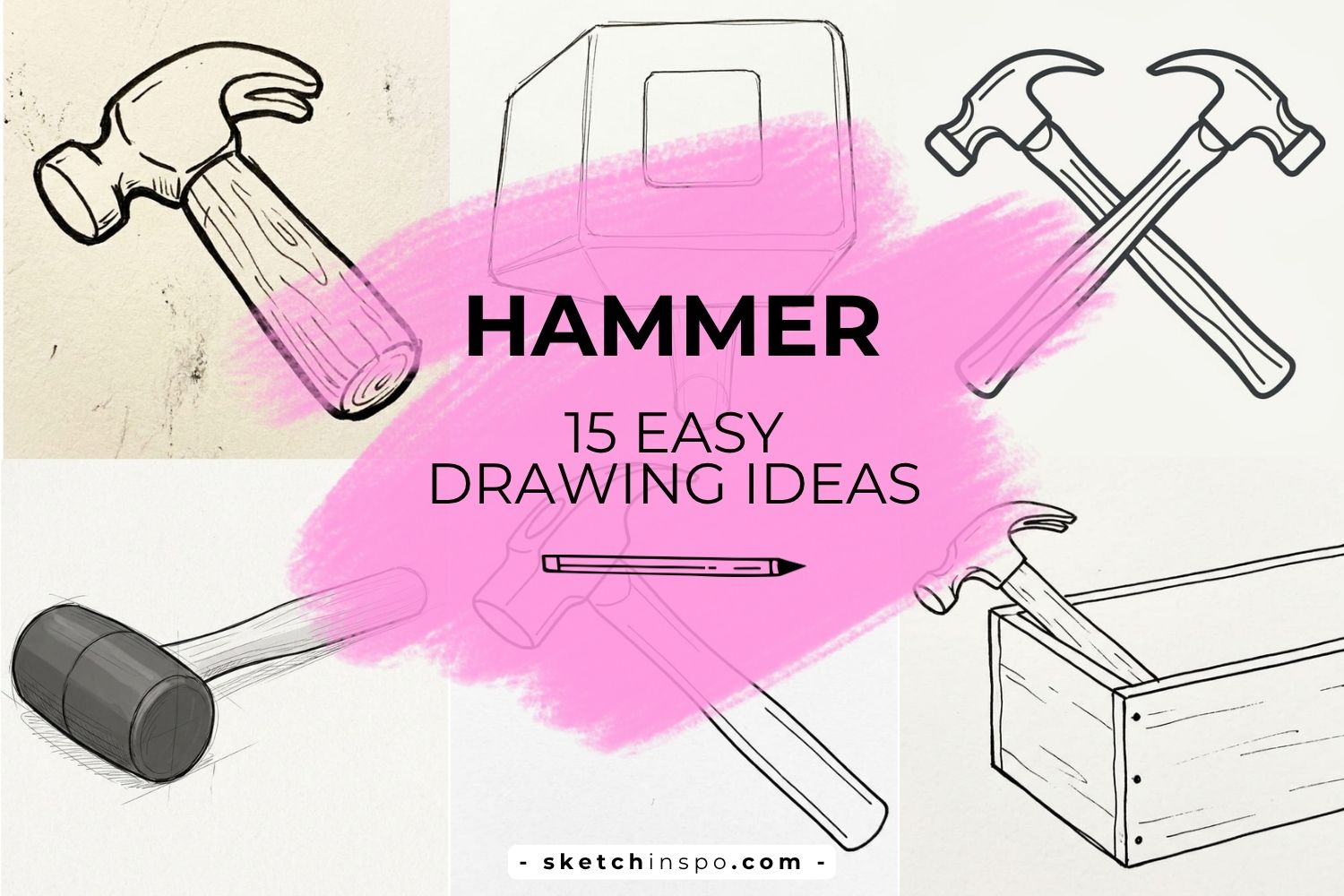
The 15 Easy Hammer Drawing Ideas
Let’s get into the fun part. Grab a pen (or pencil if you like playing it safe), and try these one by one.
1. Classic Claw Hammer (Side View)
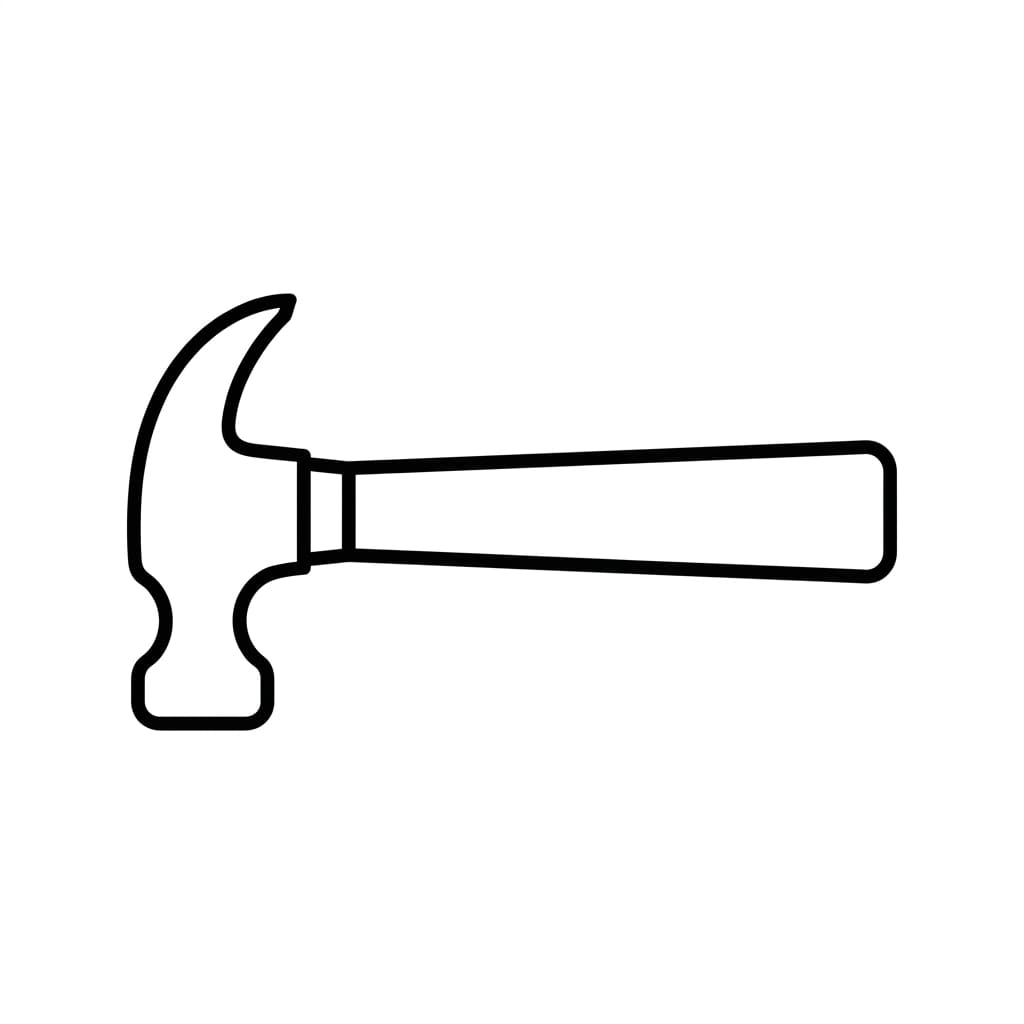
A simple claw hammer shown from the side, clean outline, minimal detail, straight handle, black line drawing, white background
Start here. This is your “hello world” of hammer drawings.
Focus on:
- A clean rectangular head
- A straight handle
- A simple curved claw at the back
Keep it basic. No need to flex your artistic muscles yet.
2. Front View Hammer with 3D Depth
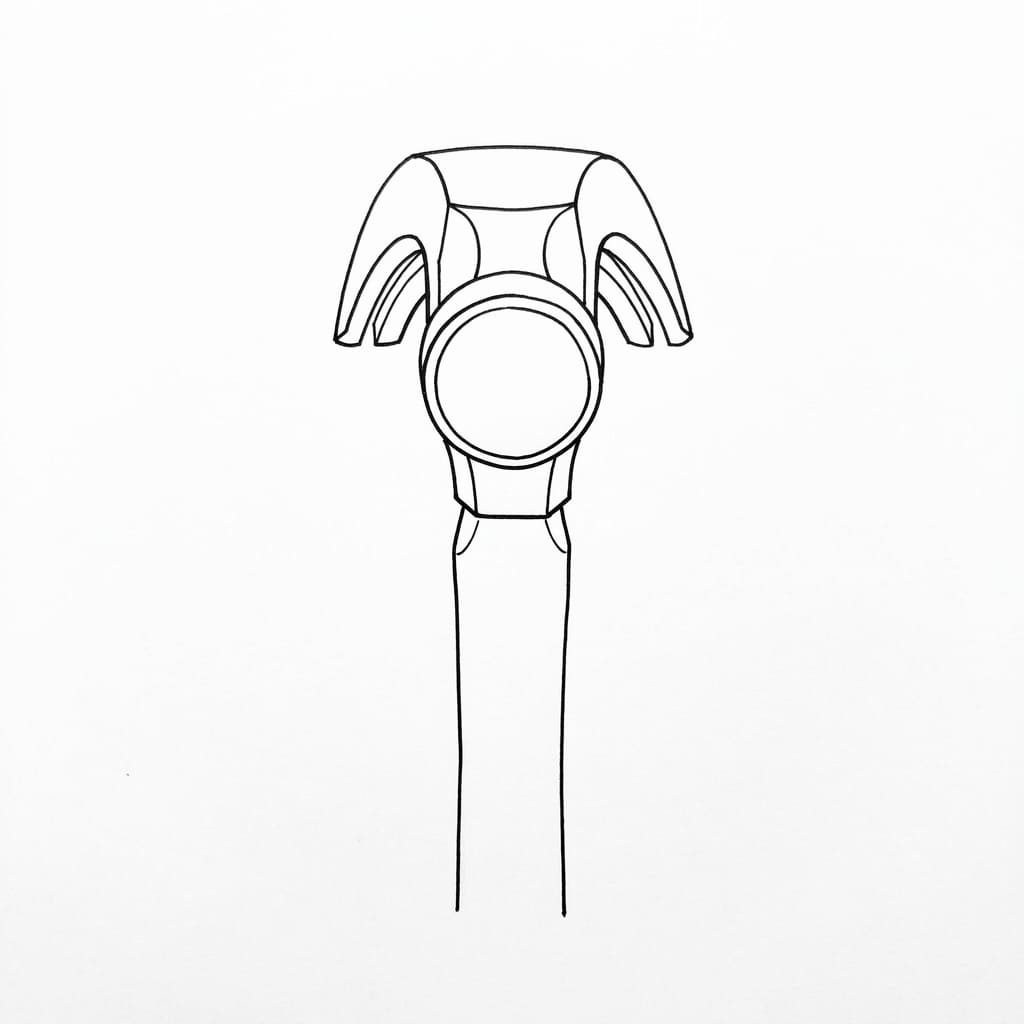
A hammer viewed from the front with slight 3D depth, showing the head symmetrically with subtle thickness, basic geometric shapes, minimal lines, simple hand-drawn sketch style, clean black line drawing, minimal detail, white background, no shading
Now we add a tiny challenge—depth.
Draw the hammer head like a thick block instead of a flat shape.
Ever noticed how even a small 3D effect makes your sketch feel “real”? Magic.
3. Diagonal Hammer
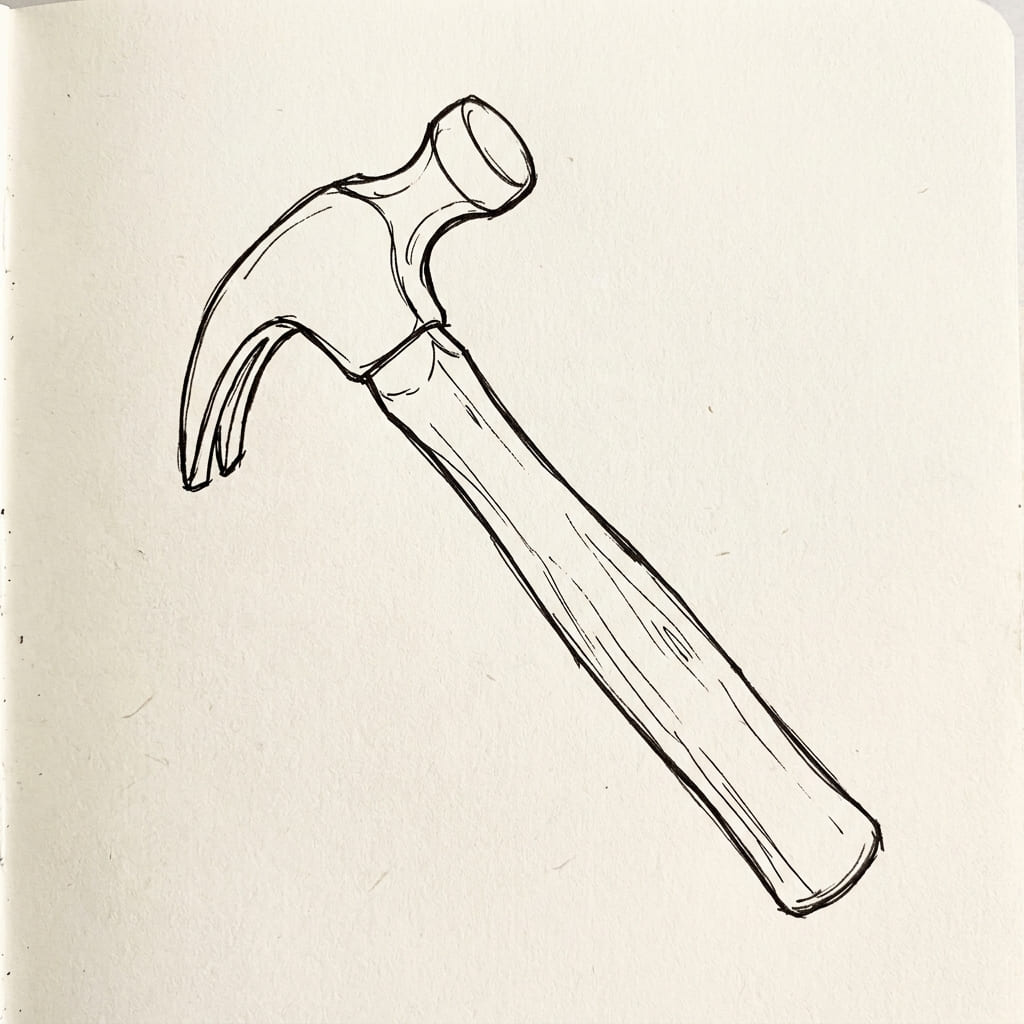
A hammer tilted diagonally, simple perspective, smooth curves, no shading, hand-drawn sketch style
Straight lines feel safe… but let’s shake things up.
Tilt the hammer slightly:
- It adds movement
- It looks more natural
- It makes your drawing feel less stiff
And honestly, it just looks cooler.
4. Crossed Hammers Icon
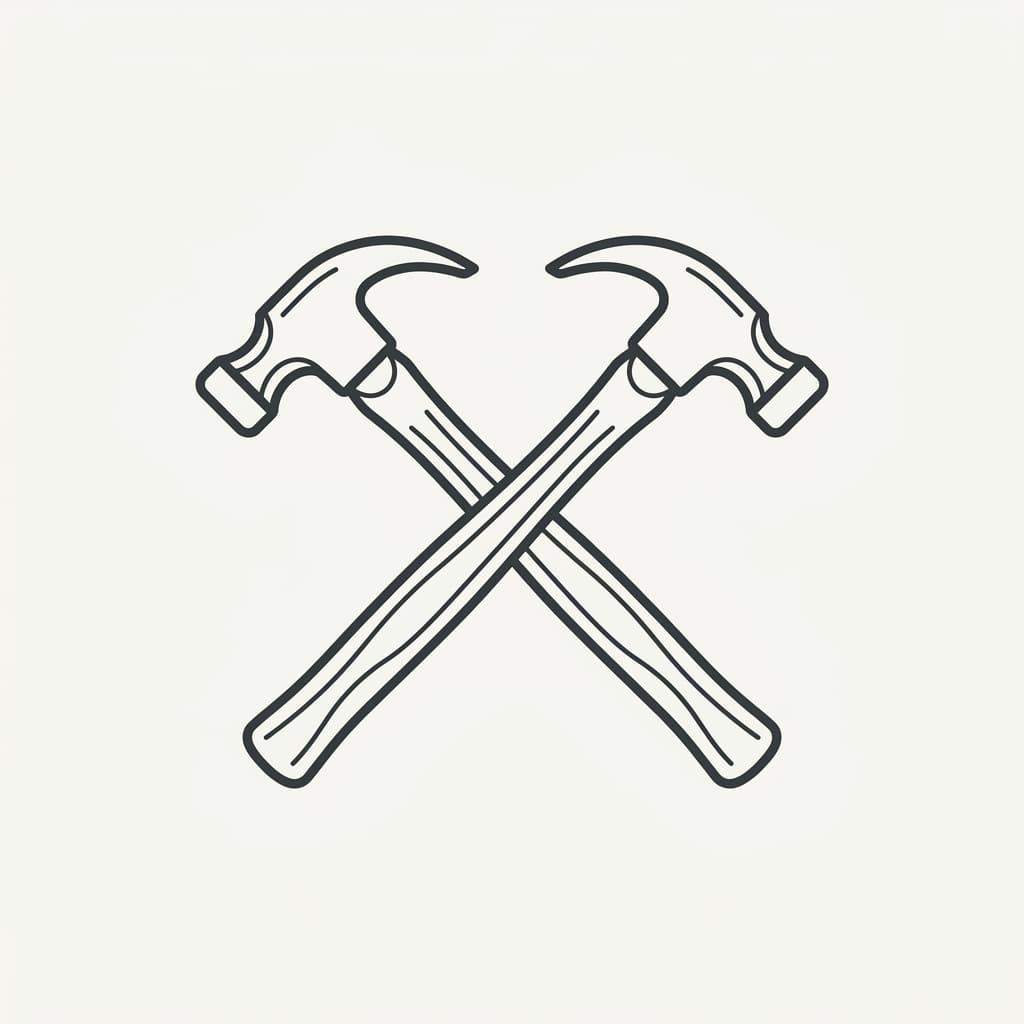
Two simple hammers crossed like an icon, clean thin lines, balanced composition, no extra detail
You’ve probably seen this in logos.
Focus on:
- Symmetry
- Clean intersections
- Balanced spacing
Mess it up? No worries. Even slightly uneven lines still look stylish here.
5. Mini Hammer
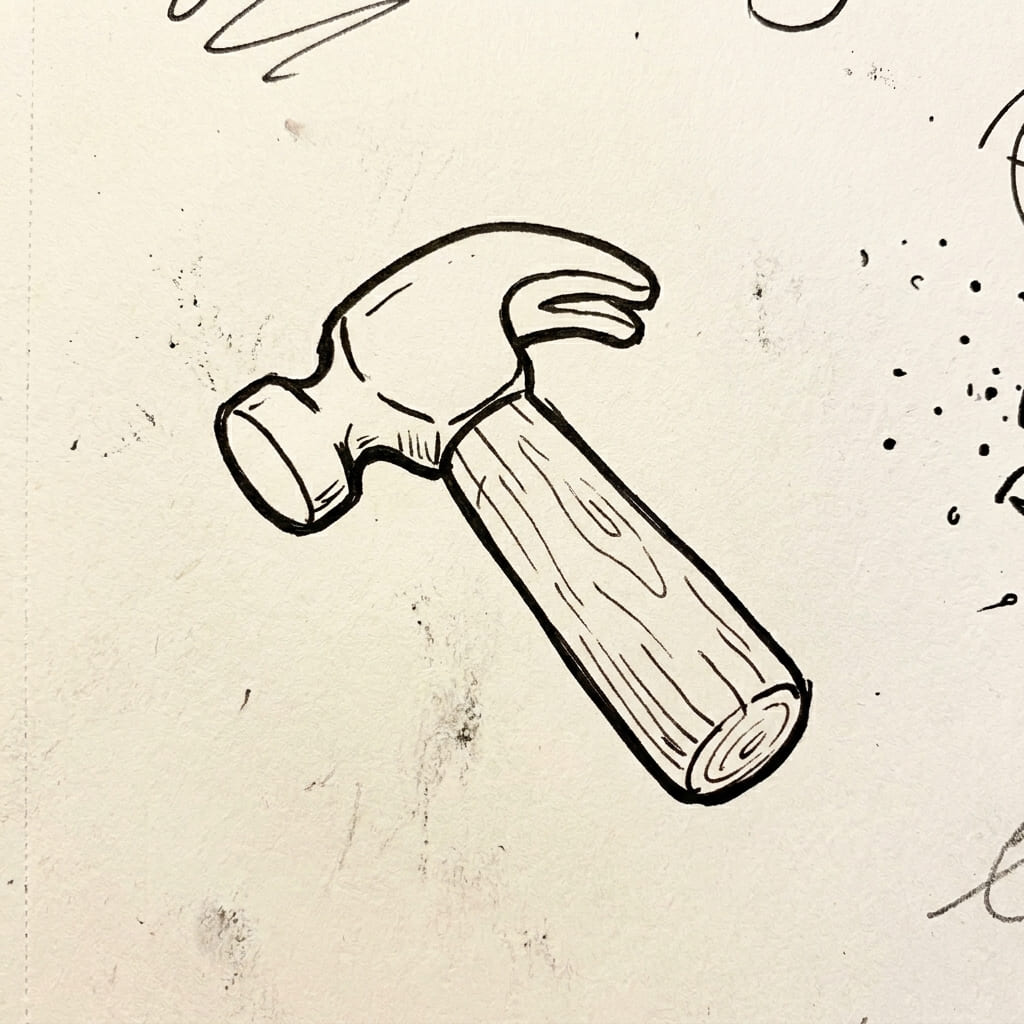
A small compact hammer, short handle, simplified proportions, easy doodle style
Shrink everything down.
Why?
- Smaller drawings help you practice control
- They force you to simplify details
Plus, tiny doodles just look cute. Not everything needs to look “serious,” right?
6. Hammer with Nail
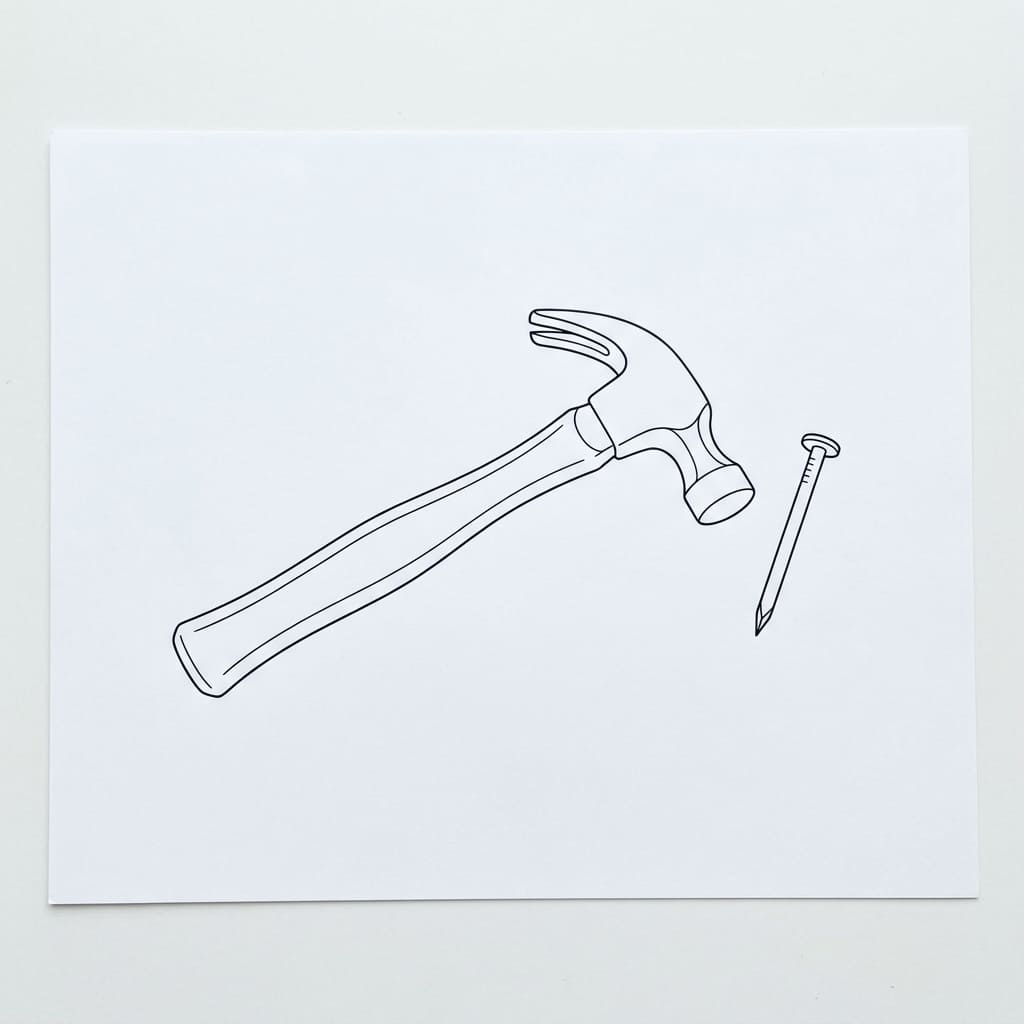
A simple hammer lying next to a single nail, both drawn in clean thin lines, no shading
Now you introduce context.
Instead of drawing a hammer alone:
- Add a nail beside it
- Keep everything minimal
This small addition instantly makes your drawing feel more “complete.”
7. Rubber Mallet
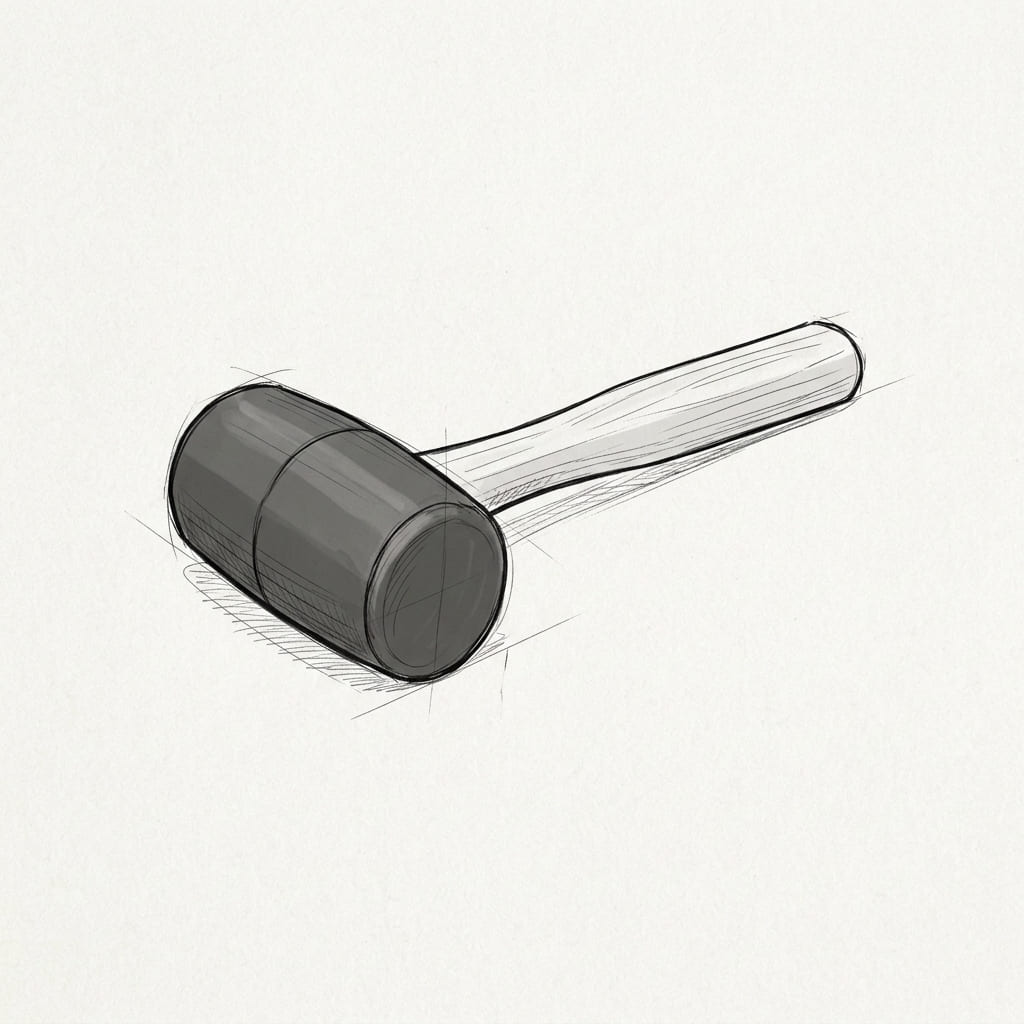
A simple rubber mallet with a cylindrical head, smooth shapes, minimal sketch style
Switch up the shape.
Unlike a claw hammer:
- The head is round or cylindrical
- The edges feel softer
It’s a great way to break out of the rectangle-only mindset.
8. Hammer Above a Nail
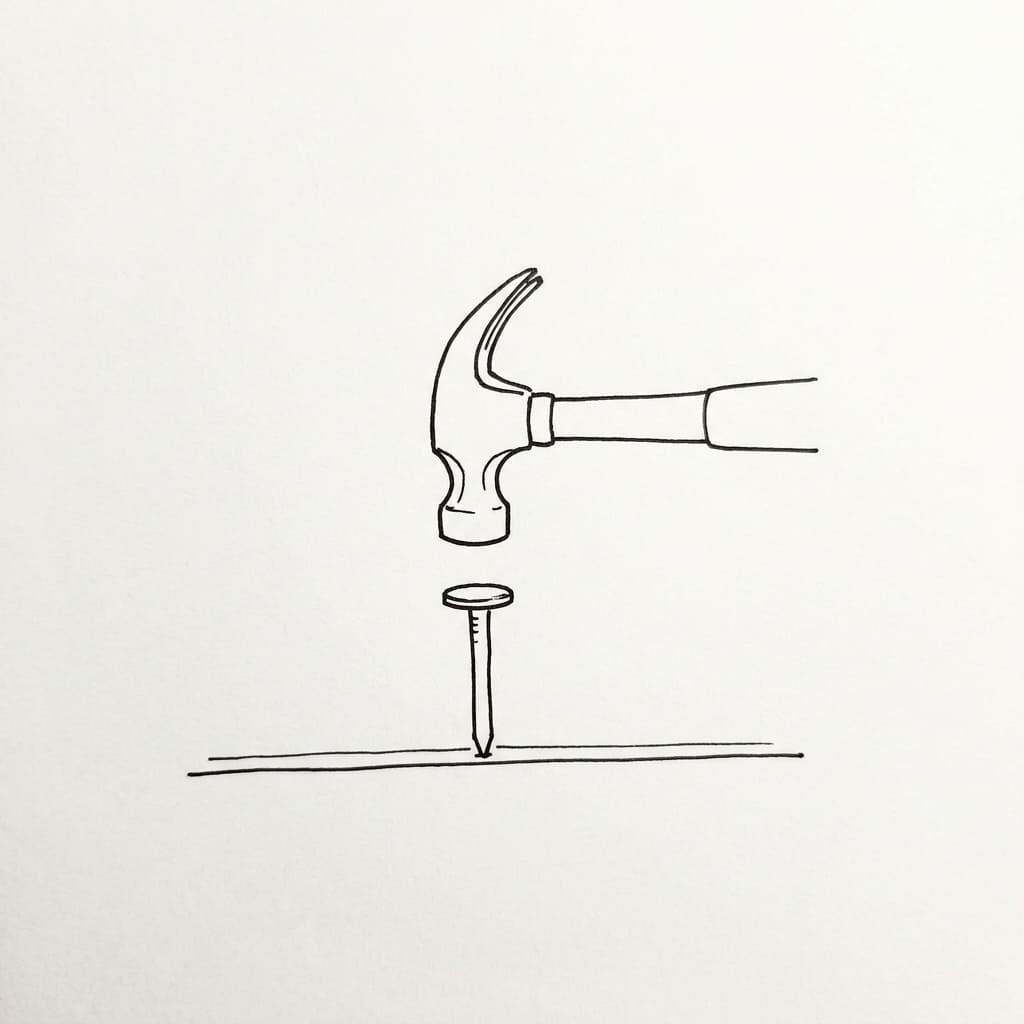
A hammer positioned just above a nail on a flat surface, no motion lines, minimal composition, simple hand-drawn sketch style, clean black line drawing, minimal detail, white background, no shading
This one tells a story—without actually doing much.
Keep it simple:
- No motion lines
- No dramatic effects
Sometimes less really is more. (Yes, I said it. No regrets.)
9. Upright Hammer
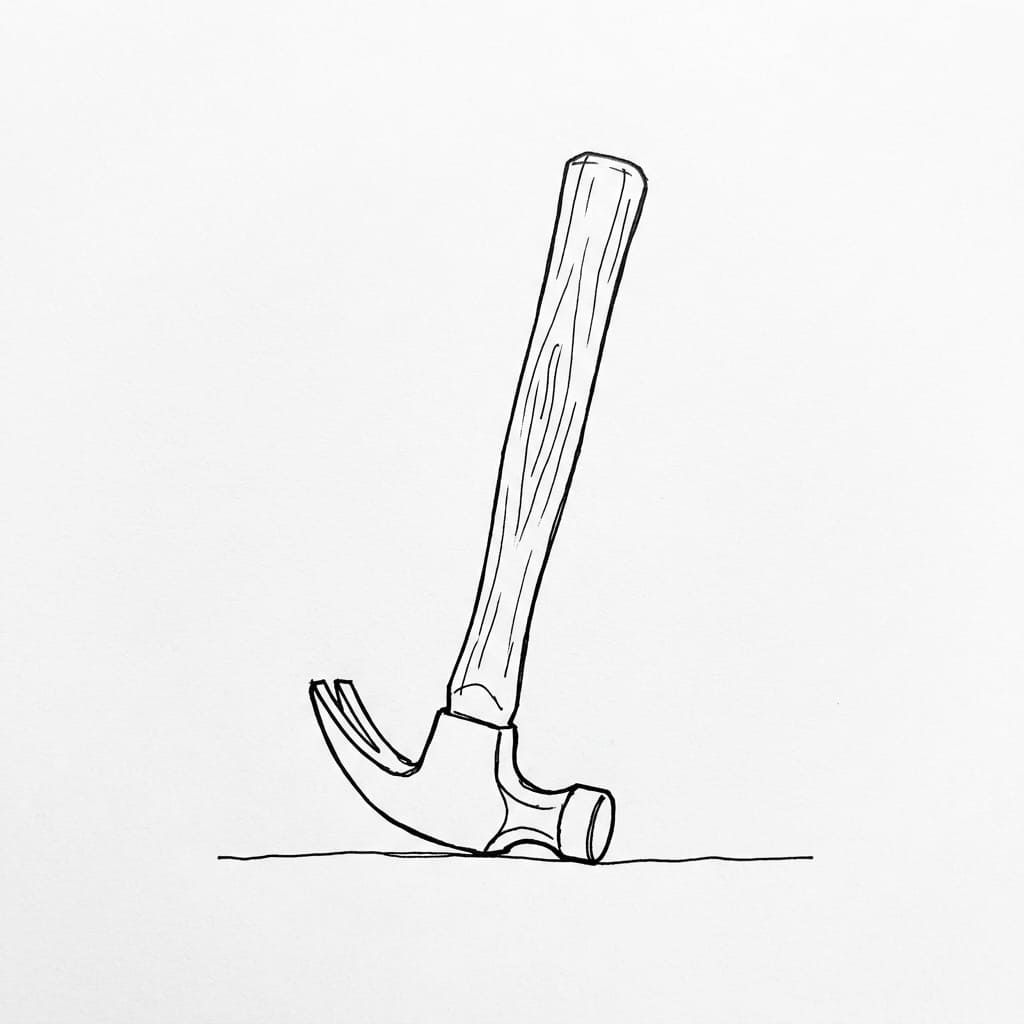
A hammer standing upright with the head on the ground and handle slightly tilted, simple perspective, simple hand-drawn sketch style, clean black line drawing, minimal detail, white background, no shading
Balance matters here.
You want it to feel like the hammer could actually stand:
- Slight tilt
- Stable base
Ever tried balancing a real hammer like this? Not as easy as drawing one, trust me.
10. Minimal Hammer Icon
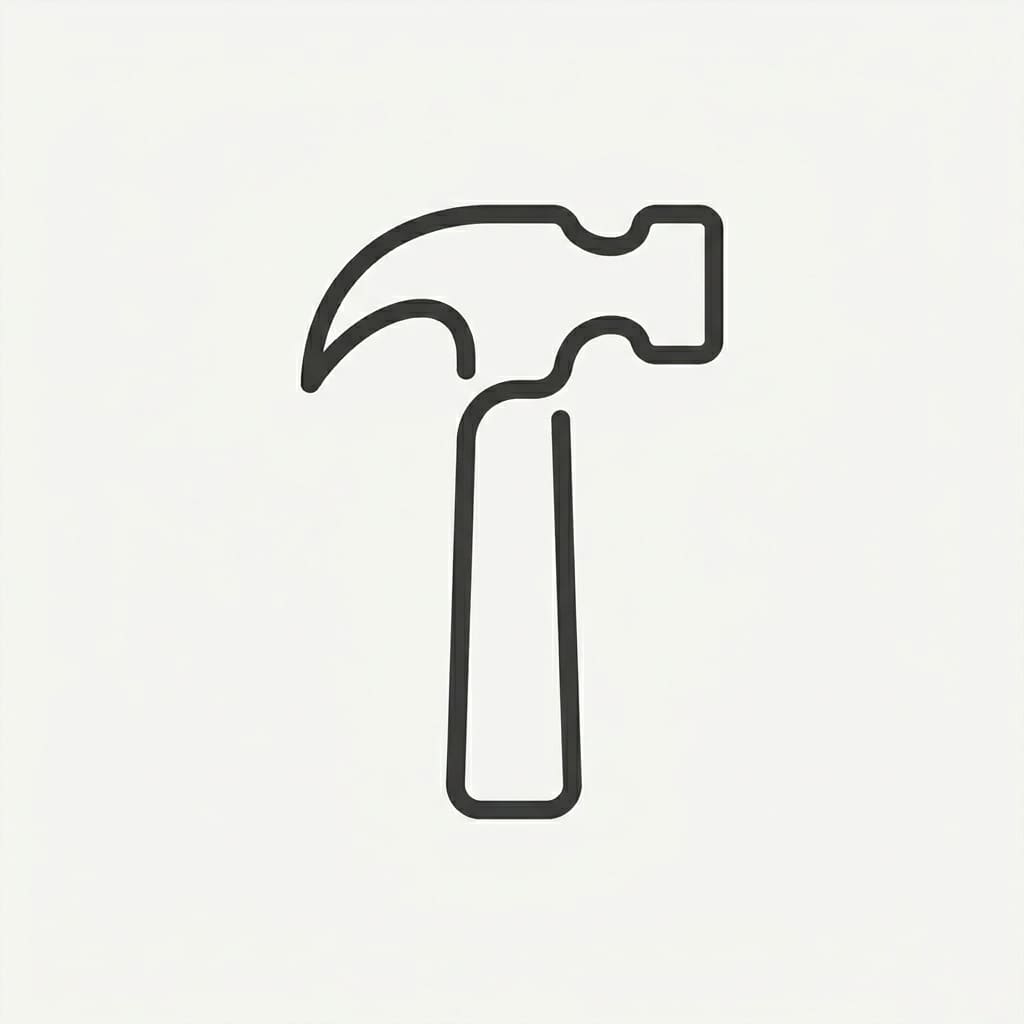
A very minimal hammer icon using clean continuous lines, no texture, simple silhouette
Time to go ultra-simple.
Reduce the hammer to:
- Just an outline
- Maybe one or two interior lines
This is where you learn restraint. Harder than it sounds, right?
11. Top-Down 3D Hammer
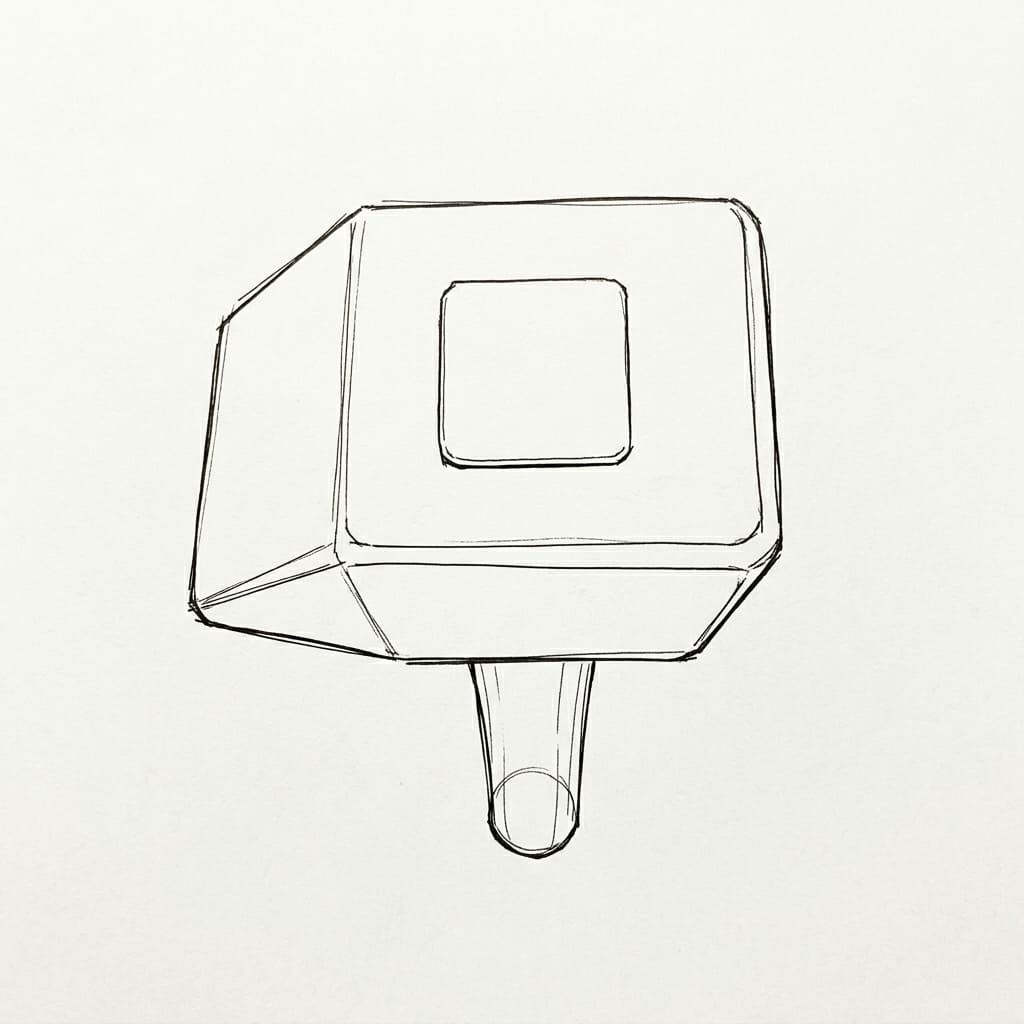
A hammer drawn from a top-down 3D angle, showing the rectangular head with slight depth and a centered handle extending downward, minimal lines, simple hand-drawn sketch style, clean black line drawing, minimal detail, white background, no shading
This one feels tricky—but it’s not.
Just imagine looking down at a table:
- The head becomes a rectangle with depth
- The handle extends downward
Perspective practice without the headache. Nice.
12. Vintage Hammer
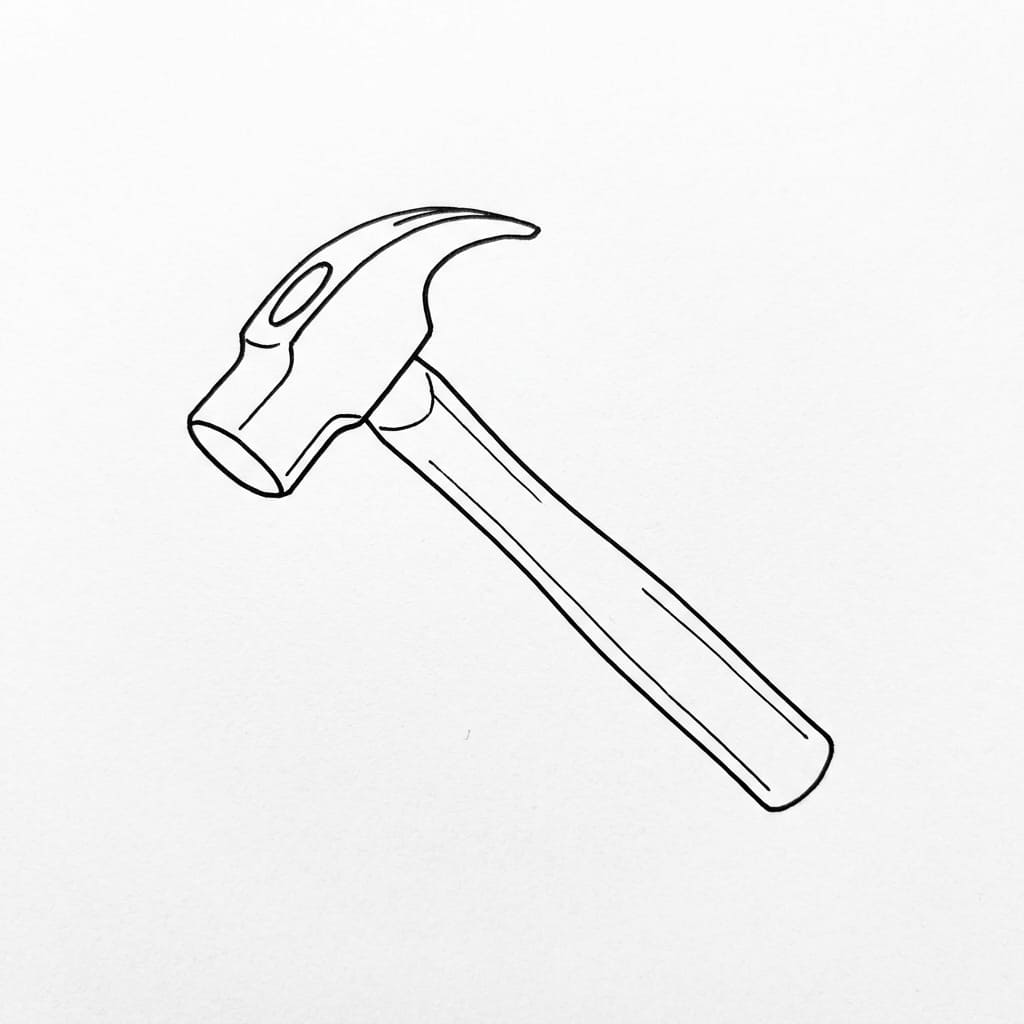
A basic vintage hammer shape with a slightly thicker head and simple handle, minimal detailing, simple hand-drawn sketch style, clean black line drawing, minimal detail, white background, no shading
Add a little personality.
Make the head slightly chunkier.
Keep the handle simple but sturdy.
Suddenly, your hammer looks like it belongs in an old workshop. Fancy, huh?
13. Hammer in Toolbox
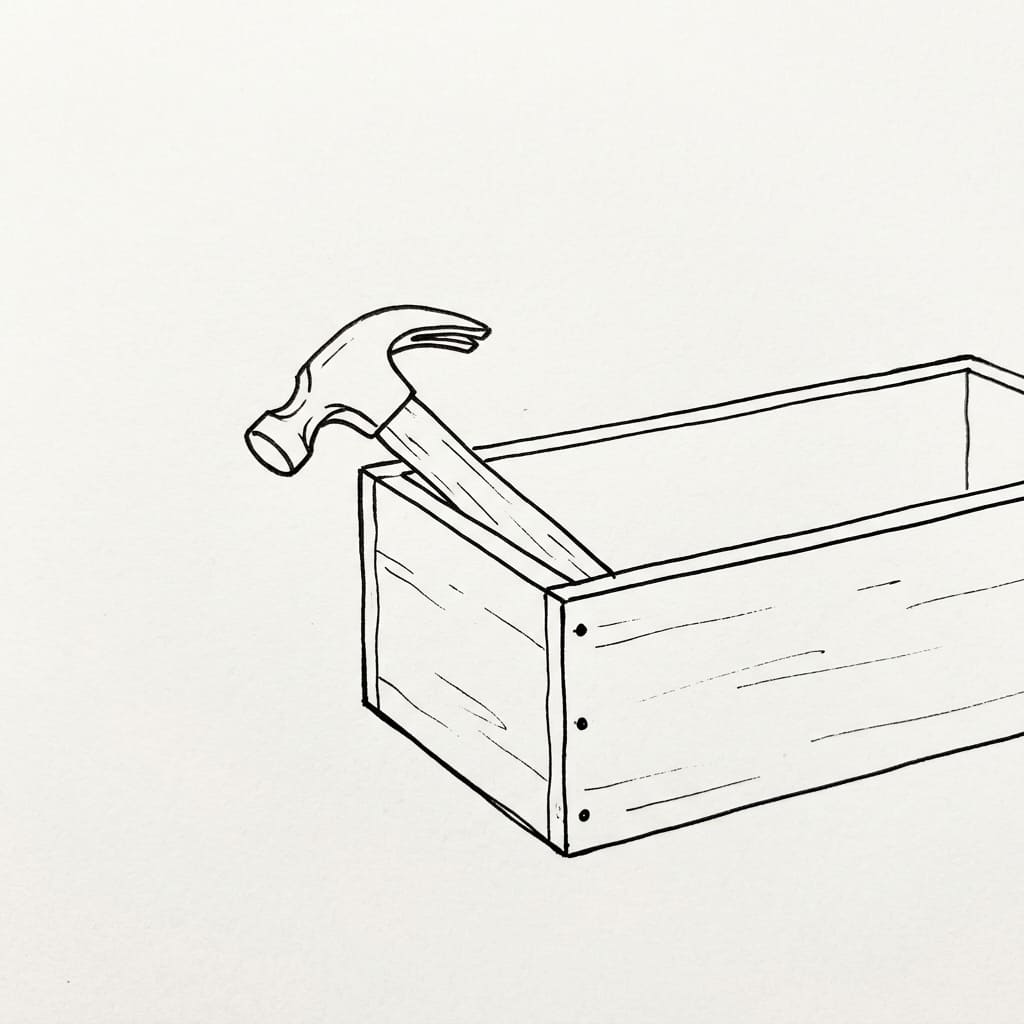
A hammer partially sticking out of a simple open toolbox corner, minimal lines, no clutter, white paper background, simple hand-drawn sketch style, clean black line drawing, minimal detail, white background, no shading
Now we build a scene.
Don’t overdo it:
- Just a corner of a toolbox
- Hammer peeking out
That’s enough to suggest a whole environment.
14. Curved Handle Hammer
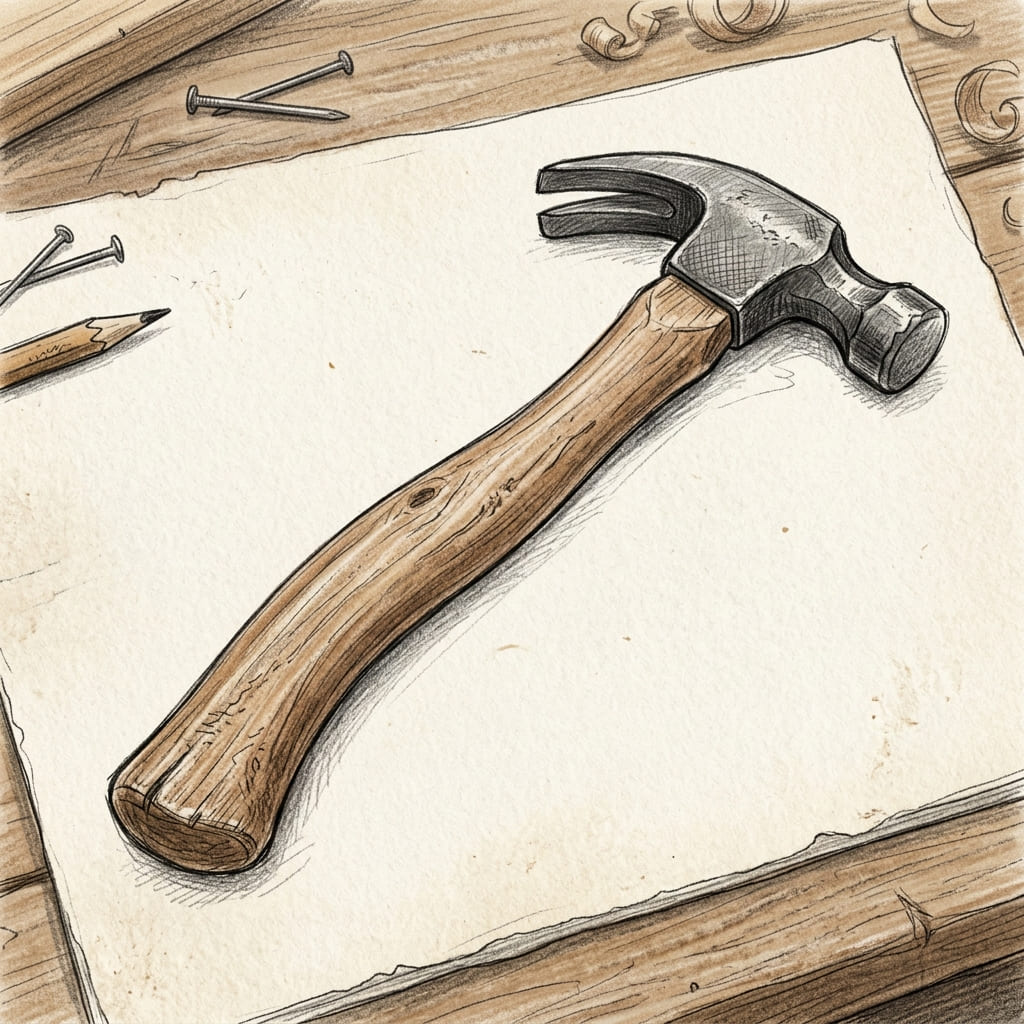
A claw hammer with a gentle curve in the handle, simple and natural hand-drawn look
Straight lines are fine… but curves feel more natural.
Add a slight bend:
- It improves flow
- It looks more organic
Little tweaks like this make a big difference.
15. Hammer with Wood Grain
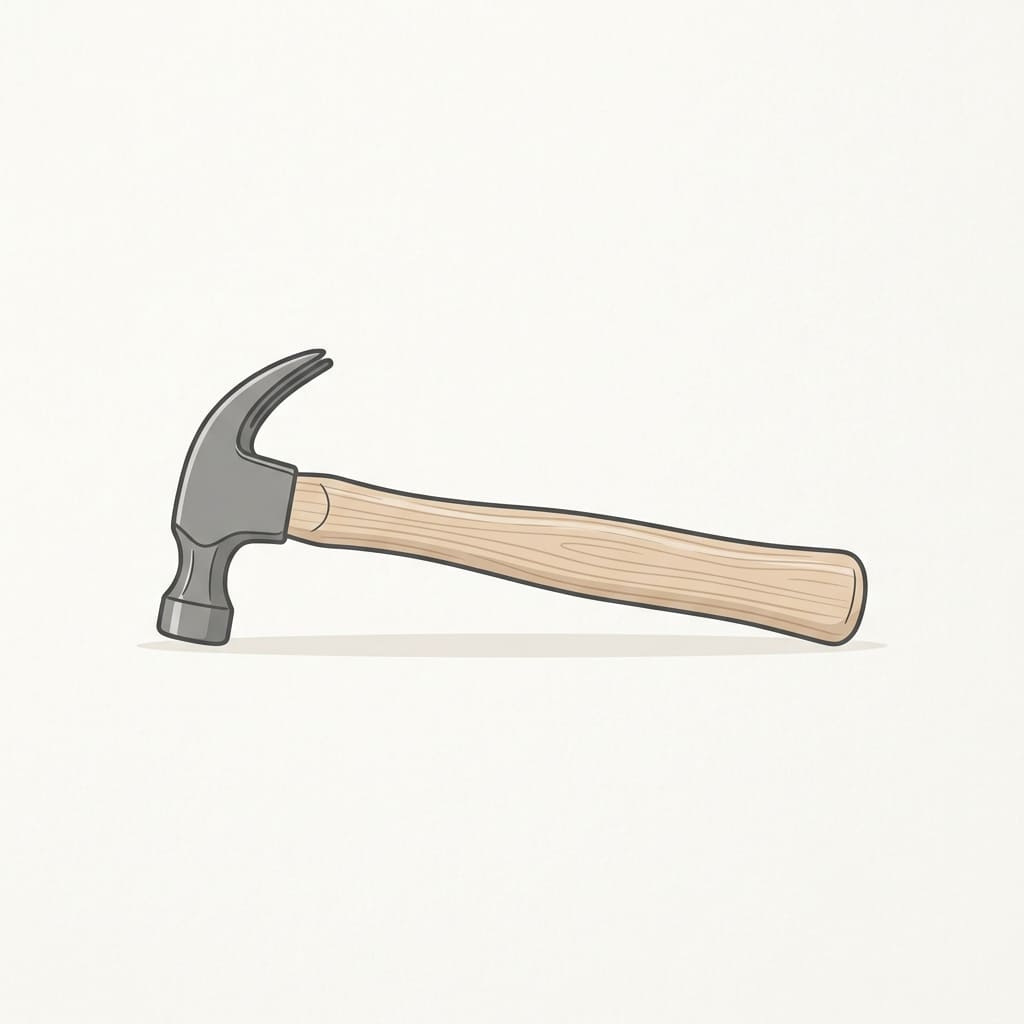
A hammer with subtle straight grain lines on the handle, minimal detail, simple outline
Finally, add a touch of texture.
Just a few lines on the handle:
- Keep them light
- Don’t overdo it
Too many lines and suddenly your “minimal doodle” turns into a full project. Been there :/
Tips to Make Your Hammer Drawings Look Better (Without Trying Too Hard)
Let’s be honest—you don’t need fancy techniques to improve fast. Just focus on a few key things:
Tip 1: Keep Your Lines Confident
- Draw in one smooth motion
- Avoid sketchy, repeated lines
Shaky lines happen, but confidence improves quickly with practice.
Tip 2: Start with Simple Shapes
Every hammer breaks down into:
- Rectangles
- Lines
- Curves
If something looks off, check the base shapes first.
Tip 3: Don’t Over-Detail
Seriously. Stop before you ruin it.
Minimal drawings work because they stay:
- Clean
- Clear
- Easy to read
More lines ≠ better drawing.
Tip 4: Practice Different Angles
Front, side, top… mix them up.
Why?
Because angle variety builds real drawing skill, not just copying.
Why These Simple Ideas Actually Work
You might think, “It’s just a hammer… what’s the point?”
Fair question.
But here’s the thing:
- You train hand control
- You learn proportion
- You practice composition
All without overwhelming yourself.
That’s a win.
Final Thoughts
So yeah, hammer doodles might not sound exciting at first. But once you start, you’ll realize how fun, flexible, and surprisingly creative they can be.
You don’t need expensive tools.
You don’t need talent (yep, I said it).
You just need a pen and a few minutes.
Try a couple of these ideas today. Or try all 15 if you’re feeling ambitious. Who’s stopping you?
And hey—next time your brain goes blank while drawing, you know what to do.
Grab a hammer… and sketch it instead.